

This article aims to provide you with a structured selection decision framework to help you systematically match the most suitable granulation technology and equipment based on your core needs. At the same time, we will also look ahead to the future development trends of organic fertilizer granulation technology.
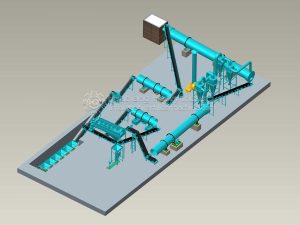
Step 1: Clarify Your Core Needs (Comprehensive Assessment)
Before contacting any equipment supplier, clearly defining your needs is the cornerstone of successful selection. Please consider and quantify the following aspects in detail:
Step 2: Review and Match Key Technology Types (Tailored to Needs)
Based on the needs identified in Step 1, review the characteristics of mainstream granulation technologies and perform an initial matching:
Step 3: Comprehensive Economic Benefit Assessment (Long-Term Perspective)
The economic benefit assessment of equipment should not be limited to the “single machine purchase price,” but should include a full life cycle cost and benefit analysis:
Step 4: Market Research and Supplier Selection (Prudent Decision-Making)
After clarifying your needs and initially matching technology types, the market research and supplier selection stage is crucial:
Organic fertilizer granulation technology and equipment are developing towards greater efficiency, intelligence, and environmental friendliness:
Intelligent and Automated: The introduction of sensors, PLC control, and Internet of Things technology enables intelligent monitoring of the production process, automatic parameter optimization, fault warning, and remote diagnosis, thereby improving production efficiency, reducing manual intervention, and ensuring the stability of product quality.
Energy Saving and Environmental Protection: Developing low-energy granulation processes and equipment (such as dryers with optimized hot air circulation and more energy-efficient motors), promoting low-carbon technologies such as dry granulation, and equipping with efficient dust and odor treatment systems to meet increasingly stringent environmental standards.
Multifunctional and Specialized: On the one hand, equipment is trending towards multifunctional integration, such as combining mixing, granulation, and shaping; on the other hand, specialized equipment for specific materials (such as high-moisture sludge, high-fiber straw) or specific product requirements (such as slow-release fertilizers, functional bio-organic fertilizers) will be more favored.
New Materials and New Processes: Applying more wear-resistant and corrosion-resistant new materials to manufacture key components (such as pressure rollers and liners) to extend equipment life. Exploring more efficient granulation mechanisms and process combinations to further improve granulation rate, particle quality, and adaptability to complex raw materials. Selecting an organic fertilizer granulator is a complex process requiring professional knowledge, thorough research, and rational judgment. We hope this series of articles will provide you with valuable insights and help you find the “golden key” to efficient, high-quality, and sustainable organic fertilizer production. This will enable you to navigate the path of green agricultural development steadily and achieve significant economic and ecological benefits.