

As a core piece of equipment for large-scale aerobic fermentation, the large wheel compost turner—characterized by its wide span, deep-turning capability, and ability to process material without leaving any “dead zones”—is well-suited for a variety of organic solid waste recycling projects. It serves as the primary fermentation machinery in organic fertilizer production lines manufactured by Huaqiang Heavy Industry, finding extensive use in sectors such as livestock farming, fertilizer production, municipal environmental protection, edible mushroom cultivation, and the processing of agricultural by-products.
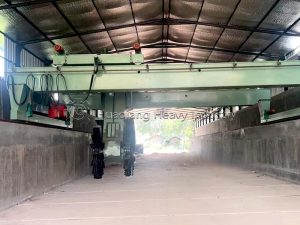
Organic fertilizer production plants represent its primary application scenario. Here, the equipment is used for in-vessel (trough-based) aerobic fermentation of livestock and poultry manure—such as that from pigs, cattle, chickens, or sheep—mixed with bulking agents like straw, sawdust, or spent mushroom substrate. With its significant turning depth and wide working span, the rotary-disc turner rapidly loosens the material and replenishes oxygen, accelerating decomposition, eliminating insect eggs and harmful pathogens, and consistently producing high-quality organic fertilizer feedstock. It is ideal for the continuous production of organic, bio-organic, and compound fertilizers at a scale of tens of thousands of tons, offering superior space utilization and lower energy consumption compared to traditional turning equipment.
On-site manure treatment at large-scale livestock and poultry farms is another prominent application. Given increasingly stringent environmental regulations, many farms are constructing their own fermentation facilities to process manure on-site. The equipment continuously turns the compost piles, allowing for precise control over fermentation temperatures and minimizing odor emissions. This transforms manure into organic fertilizer for internal use, fostering a circular “crop-livestock” system while reducing the costs and environmental risks associated with transporting waste off-site.
The equipment is also widely employed in the treatment of municipal and industrial solid waste. It facilitates the stabilization and composting of materials such as municipal sewage sludge, organic food waste, filter mud from sugar refineries, distillers’ grains, and pharmaceutical residues. Through aerobic fermentation, sewage sludge is dewatered and reduced in volume, thereby lowering pollution risks; meanwhile, various agricultural and industrial by-products are decomposed and repurposed as organic fertilizer feedstock—aligning with environmental policies focused on the reduction and resource recovery of solid waste.
Edible mushroom cultivation facilities represent another specialized application scenario. The cultivation of mushrooms such as *Agaricus bisporus* (button mushrooms) and *Pleurotus ostreatus* (oyster mushrooms) requires a fermented and decomposed growth substrate. The pre-fermentation process for mixtures—typically composed of wheat straw and cow manure—demands a high degree of uniformity during the turning and mixing phase. Large wheel compost turners provide a gentle yet consistent mixing action; they effectively regulate the temperature and moisture content of the compost pile, ensuring a stable fermentation process. By producing high-quality substrate for mushroom cultivation, these machines serve as an ideal choice for standardized fermentation facilities in large-scale mushroom farms.
Furthermore, these machines are utilized in large horticultural centers and facilities for processing landscape waste. Garden waste—such as pruned branches, fallen leaves, and weeds—is shredded and then turned and fermented to produce humus-rich soil, which is subsequently used for landscaping, seedling cultivation, and soil improvement. Featuring a high level of automation, the equipment supports PLC-controlled autonomous operation, significantly reducing the need for manual labor.
In summary, the core value of the large wheel compost turner lies in its ability to integrate with high-capacity fermentation bays. It effectively addresses the challenges of decomposing various types of organic waste, facilitates the conversion of solid waste into fertilizer, and supports both sustainable agricultural development and environmental protection initiatives.