

Chain Plate Compost Turning Machine
The chain-plate compost turner is designed for organic fertilizer fermentation; it ensures uniform turning and deep-layer oxygenation, making it suitable for large-scale manure composting operations.
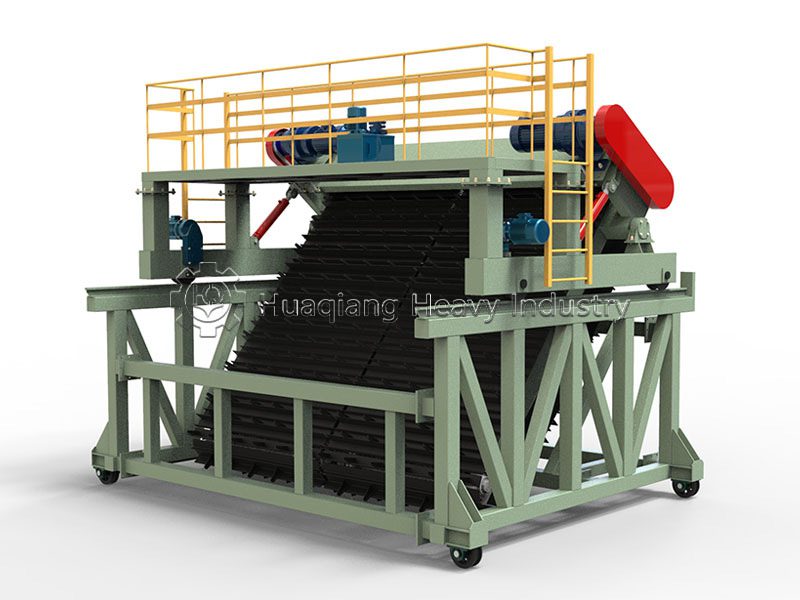
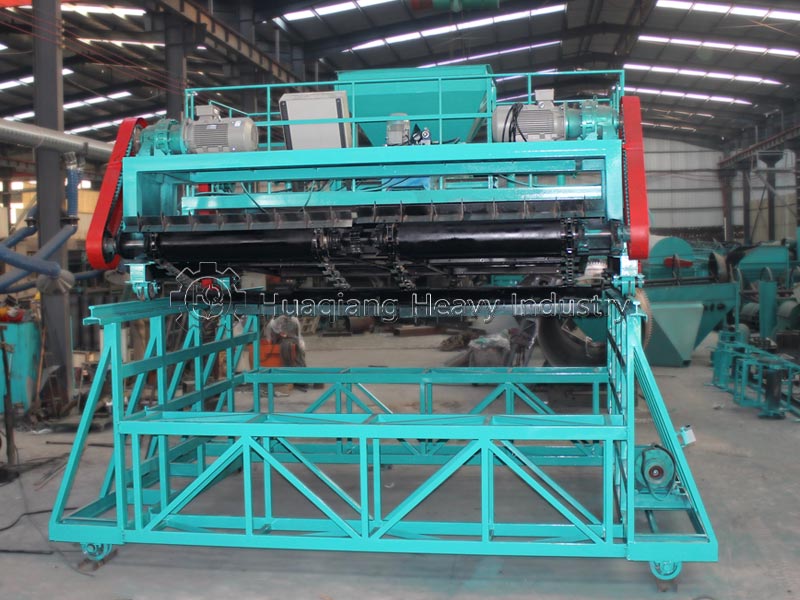
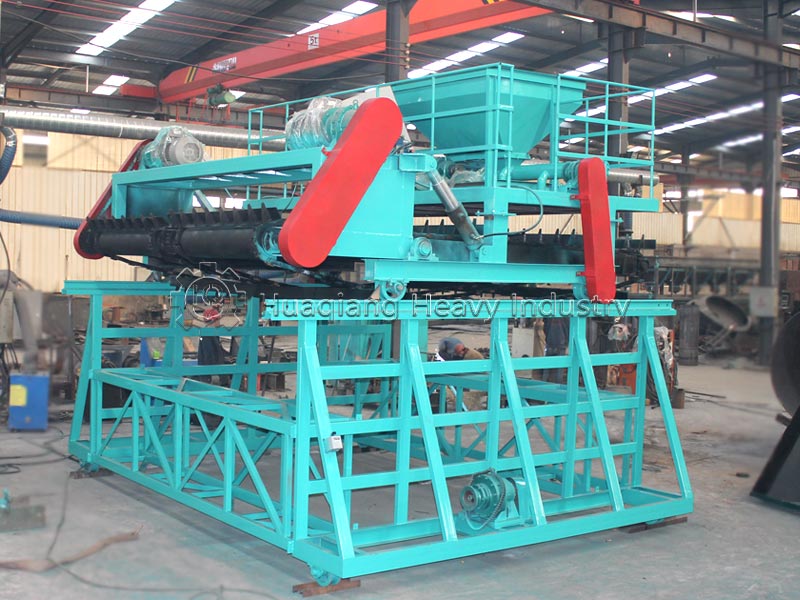
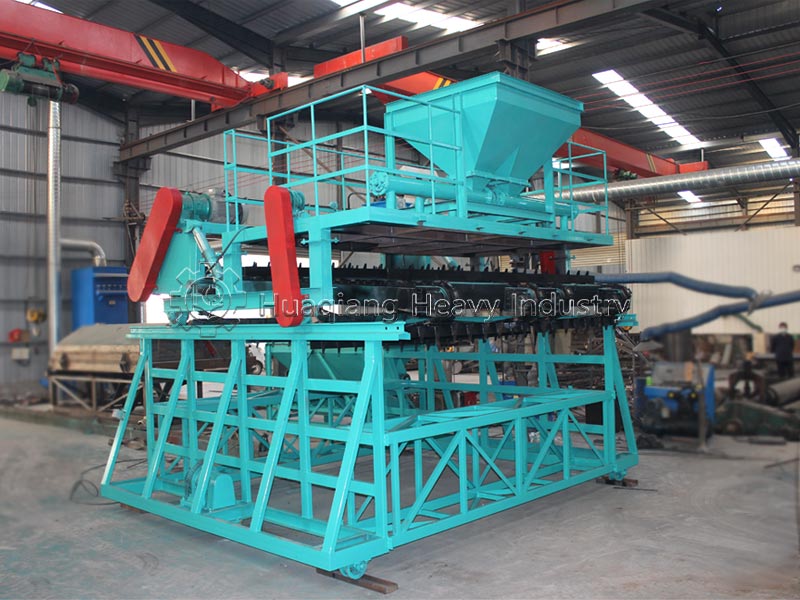
DETAILS
Introduction
The chain plate compost turning machine is a mechanized turning device designed for channel-type aerobic fermentation processes. It is primarily used for the large-scale, continuous, deep-channel aerobic composting of organic solid wastes, such as livestock and poultry manure, sludge, filter cake, spent grains, medicinal residues, biogas residue, straw, and sawdust. Operating along rails installed on the fermentation channel, the equipment utilizes a chain-plate drive system to turn, mix, and break up materials—piled to a depth of 1.5 to 2 meters—thereby ensuring full contact between the material and the air and accelerating the aerobic fermentation process.
How does a chain plate compost turning machine work?
The operation of a chain plate compost turning machine involves the following key steps:
Step 1: Positioning and Lowering. The main machine frame is mounted over the fermentation tank and travels longitudinally along rails installed on the tank walls. A turning carriage sits on the frame; once it reaches the designated turning position, a hydraulic system slowly lowers the turning assembly into the tank.
Step 2: Turning Operation. The turning assembly (chain plates) begins to rotate continuously while the entire frame moves forward along the tank. The chain plates continuously scoop up material from the tank, conveying it diagonally to the rear of the frame where it is discharged and scattered from a height. The material remains on the support plates for an extended period and makes full contact with the air, facilitating moisture evaporation and oxygen replenishment.
Step 3: Cyclic Operation. Upon completing a pass, the hydraulic system lifts the turning assembly, and the frame returns to the starting end. For wide tanks, the turning carriage can shift laterally by the width of the chain-plate assembly to begin turning the next section of material.
Step 4: Multi-Tank Operation. Equipment equipped with a transfer carriage allows a single turner to operate across multiple tanks, eliminating the need for separate equipment for each fermentation tank and significantly reducing investment costs.
The core drive mechanism utilizes a chain drive and a rolling-support plate design; this minimizes turning resistance and saves energy, making it particularly suitable for deep-tank operating environments.
Applicable Scenarios and Material Range for Chain Plate Compost Turning Machine
Chain plate compost turners are suitable for the aerobic fermentation of the following materials:
Livestock and poultry manure: chicken, cattle, pig, and sheep manure, etc.
Agricultural waste: straw fragments, rice husks, sawdust, etc.
Industrial organic residues: distillers’ grains, medicinal residues, cassava residue, furfural residue, etc.
Municipal organic waste: sewage sludge, biogas residue, filter mud, municipal solid waste, etc.
Others: fruit peels, landscaping waste, humic acid, etc.
Typical application scenarios include: centralized manure treatment centers for large-scale farms, large-scale organic fertilizer production plants, municipal sludge aerobic fermentation facilities, and agricultural waste resource utilization projects.
Why Choose a Chain-Plate Compost Turning Machine?
In the production of organic fertilizer via deep-trough, high-temperature aerobic fermentation, conventional turning equipment often suffers from issues such as insufficient turning depth, blade entanglement, material sticking (especially with wet feedstock), and incomplete fermentation at the bottom layer. These problems lead to uneven oxygen supply, poor decomposition, and extended fermentation cycles. The chain-plate compost turner is specifically designed to address these pain points.
Its core advantages include:
Thorough Turning: Fully turns material layers up to 2 meters deep in a single pass, ensuring uniform oxygen supply throughout the trough.
No Entanglement: The chain-plate structure handles fibrous materials with ease, ensuring stable and smooth operation.
Labor Savings: Features fully automated, intelligent control for 24-hour, unattended operation.
Enhanced Quality: Ensures uniform fermentation and decomposition, resulting in organic fertilizer with consistent nutrient potency.
Cost Efficiency: Low energy consumption, minimal breakdowns, and easy maintenance.
With its outstanding advantages—including thorough deep turning, stable and efficient production, high adaptability, and low operating costs—the chain-plate compost turner has become the preferred equipment for upgrading modern deep-trough organic fertilizer fermentation processes and achieving large-scale, eco-friendly production.