

Hydraulic Compost Turning Machine
The fermenting and dumping of organic wastes, such as livestock manure, sludge garbage, sugar factory filter mud, dregs cake,etc
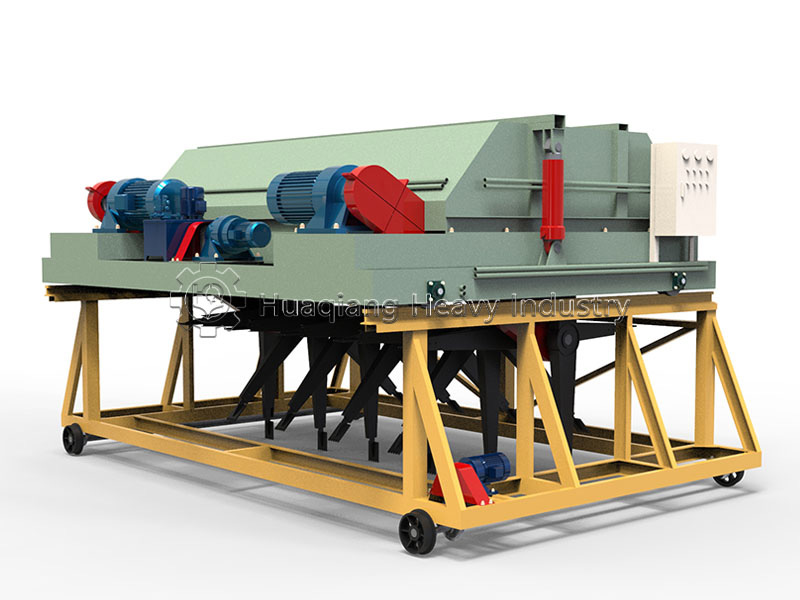
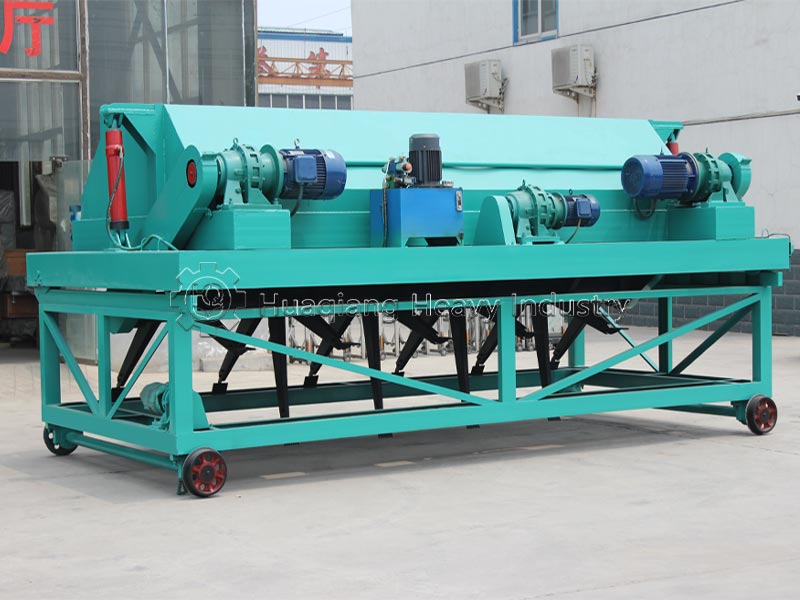
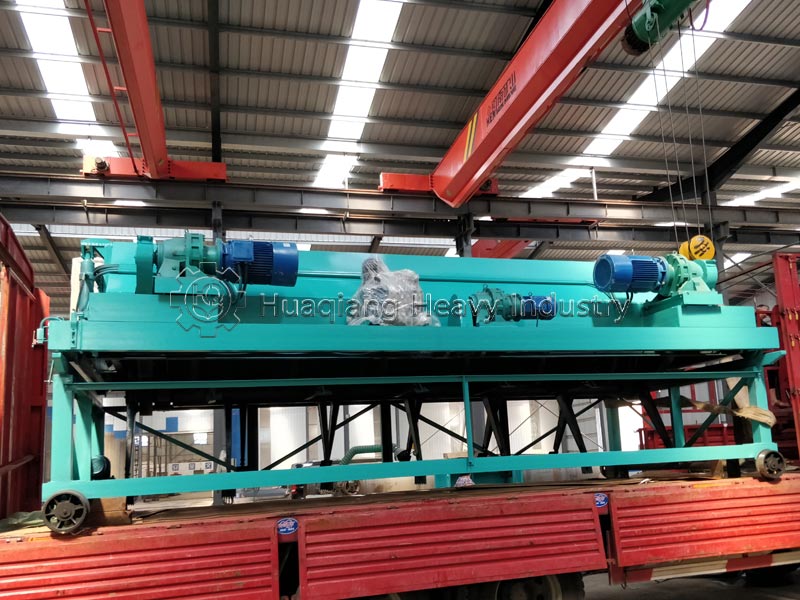
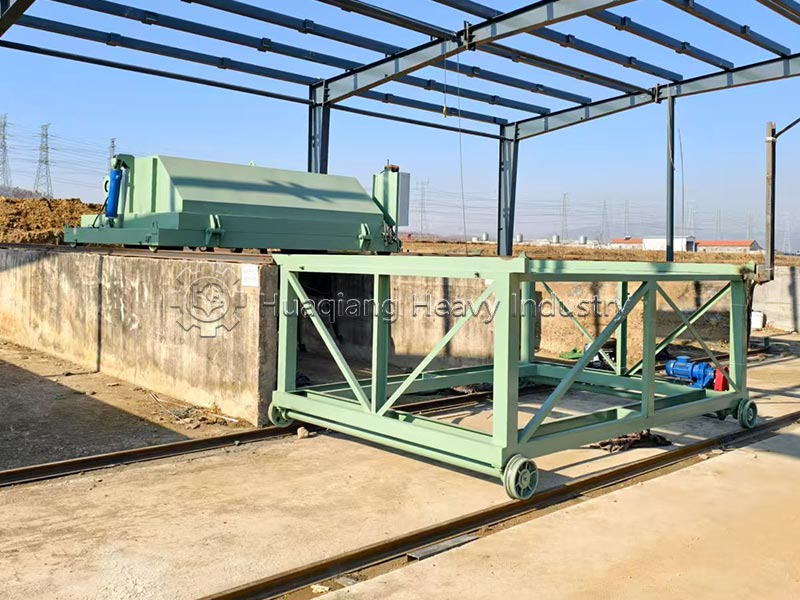
DETAILS
The hydraulic compost turning machine—fully referred to as the hydraulic lifting compost turning—is an automated turning machine designed specifically for the aerobic fermentation of organic waste. Building upon the design of traditional trough compost turners, it incorporates a fully hydraulic drive and control system and comprises core components such as the main frame, rail-mounted travel mechanism, hydraulic station, turning drum, and centralized control cabinet.
What is the working principle of the hydraulic compost turning machine?
The core operational logic of the equipment relies on the synergy between hydraulic drive and chain-driven turning mechanisms.
Coordinated Operational Process
During operation, the hydraulic compost turning machine moves at a constant speed along rails laid on both sides of the fermentation trough. A high-power hydraulic motor drives the turning rotor to rotate at high speed; alloy mixing teeth, arranged in a spiral pattern on the rotor, cut deep into the material, breaking up compacted clumps and tossing the material upward.
Simultaneously, a hydraulic lifting system adjusts the rotor’s position in real-time based on the height of the compost pile, ensuring a consistent turning depth.
Fermentation and Temperature-Rising Logic
This deep-turning method brings oxygen-deprived “cold material” from the bottom to the surface while burying dry “hot material” from the surface into the interior. Combined with the ventilation system at the bottom of the trough, this process allows the pile temperature to rapidly rise above 70°C within 48 hours.
During the turning process, the material is shifted backward by approximately 0.2 to 1 meter, resulting in rapid turning and uniform mixing, thereby ensuring thorough contact between the material and the air.
What are the application scenarios for hydraulic compost turning machines?
Hydraulic compost turning machines are suitable for aerobic fermentation processes and are used across various sectors:
Organic Fertilizer Plants
Core fermentation equipment in organic fertilizer production lines
Large-scale Livestock Farms
Processing of livestock and poultry manure (chicken, pig, cattle, sheep, etc.)
Sludge Treatment Plants
Industrial-scale, harmless treatment of municipal sewage sludge
Sugar Mills&Cultivation Bases
Processing of sugar mill filter mud; fermentation of substrates for edible fungi (such as button mushrooms)
Materials that can be processed:
Livestock and poultry manure, sludge and waste, sugar mill filter mud, dregs and oil press cakes, straw, sawdust, and other organic waste.
What are the key advantages of a hydraulic compost turning machine over standard models?
Compared to standard trough compost turners driven by chains or gears, the hydraulic version offers advantages that go beyond just the power source.
Higher Power Output
Hydraulic systems deliver high torque and rapid response; the turning force is typically 1.5 to 2 times that of standard models, allowing for the easy handling of materials with 65%–80% moisture content—materials that are highly viscous, sticky, or prone to forming large clumps. Hydraulic motor-driven turning drums provide 30%–50% more torque than electric motors of equivalent power.
Greater Turning Depth
Turning depths generally range from 1.5 to 2.5 meters, with some large-scale models reaching up to 3 meters. While standard turners are usually limited to shallow piles (under 1.5 meters), this system allows users to consistently increase production capacity without reducing pile thickness.
Flexible Operation and Adjustment
The hydraulic system enables stepless drum lifting and smooth adjustment of travel speed. Users can precisely set the turning depth and frequency based on material moisture, fiber content, and the stage of fermentation.
Reliable Overload Protection
Hydraulic systems offer inherent overload protection; the system automatically relieves pressure when resistance becomes excessive, thereby safeguarding core components. Even if foreign objects like stones or scrap metal enter the channel, the hydraulic cushioning prevents direct damage to the shaft or motor. The failure rate of core components is approximately 60% lower than that of traditional equipment.
Multi-Channel Capability
When paired with a transfer carriage (shifter), a single unit can service multiple fermentation channels in rotation. This significantly boosts equipment utilization rates and reduces investment costs for both infrastructure and machinery.
For enterprises planning or upgrading organic fertilizer production lines, the choice of windrow turning equipment directly impacts fermentation efficiency, product quality, and operating costs. By replacing traditional mechanical drives with hydraulic systems, hydraulic compost turning machines achieve a significant leap in power, working depth, flexibility, and reliability. This represents not merely a simple improvement to existing equipment, but a systematic upgrade spanning everything from power mechanics to operational methods.
PARAMETERS
| Model | Main Motor | Walking Motor | Moving Motor | Hydraulic Pump Motor |
| FPY4 | 22kw | 1.5kw | 1.1kw | 4kw |
| FPY5 | 30kw | 1.5kw | 1.5kw | 4kw |
| FPY6 | 37kw | 2.2kw | 1.5kw | 4kw |