

Double Roller Press Granulator
Roller press granulator production process no need for drying and dewatering. The material does not reactchemically, so it is very convenient to process.
Model DZJ-I 1.0/DZJ-I 2.0/DZJ-I 3.0
Power 15kw/18.5kw/30kw
Production 1-1.5/1.5-2.5/2.5-3.5
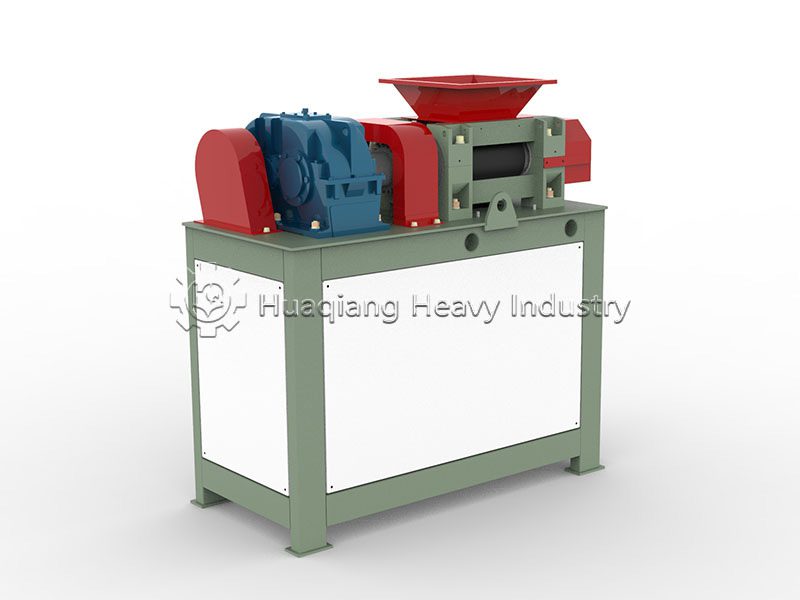
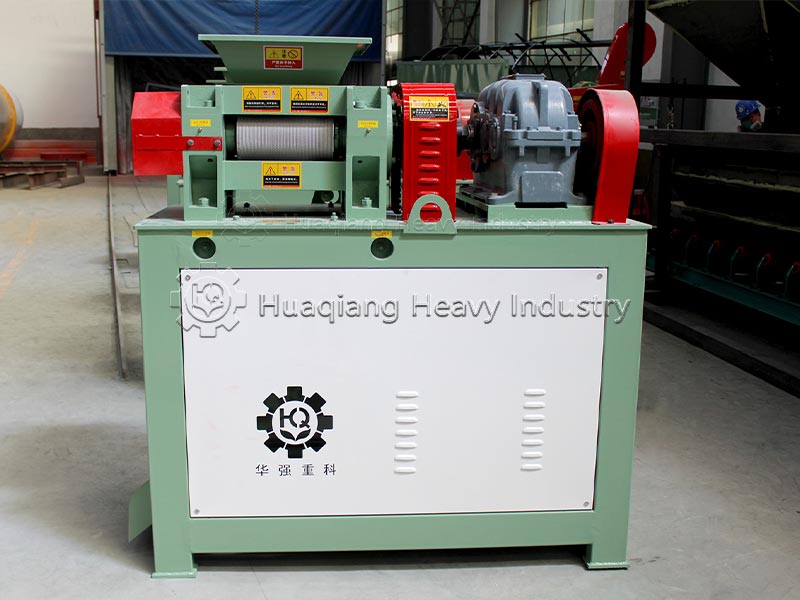
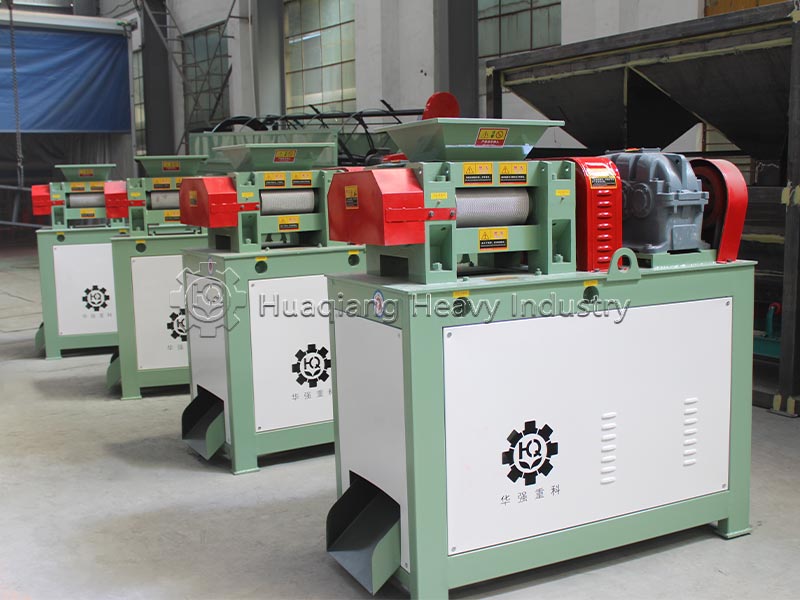
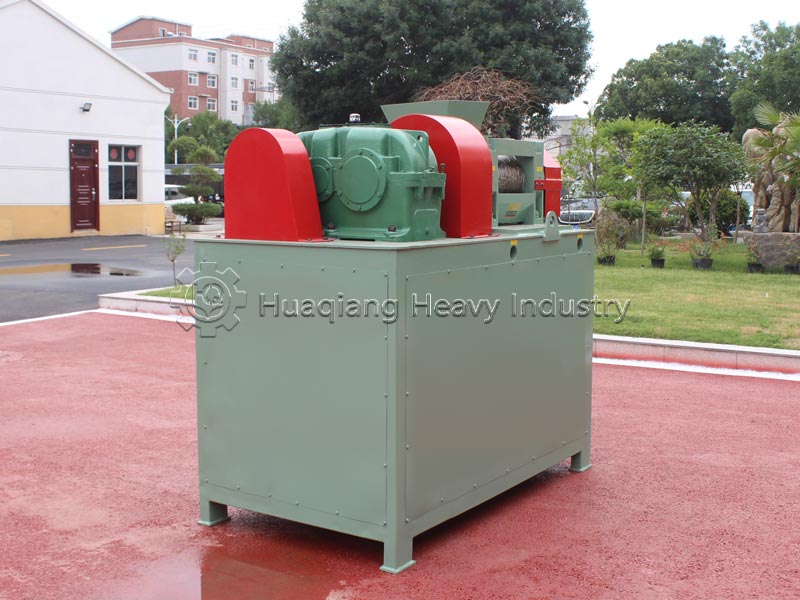
DETAILS
The double roller press granulator is a piece of dry granulation equipment that applies high pressure to powdered materials via two counter-rotating rollers, forcing the material into mold cavities to form granules. Unlike traditional wet granulation methods (such as disc granulators), this process requires no water, binders, or subsequent drying. After being fed into the top of the machine, the material undergoes degassing and screw pre-compression before entering the rollers; under immense extrusion force, it undergoes plastic deformation and is compressed into sheets, which are then crushed, granulated, and screened to yield the final granular product.
Application of roller press granulator machine
Our factory dedicated to provide compound fertilizer granulation equipment and technology service to users, including the general layout design for an annual output of 1-100 thousand tons without drying equipments, the production of complete sets of technical guidance, commissioning, all in one service
This kind of roller press granulator is widely used in fertilizer processing industry. Because of its low price, convenient use and maintenance, and low operation cost, it is favored by small and medium-sized fertilizer plants.
What are the core advantages of the double roller press granulator?
Compared to other granulation methods, the double roller press granulator excels in the following areas:
Dry process; no drying required
Materials are formed directly at ambient temperature without the addition of water or binders, eliminating the need for a drying stage. For heat-sensitive materials (such as bio-fertilizers or certain pharmaceutical ingredients), this process effectively prevents the loss of active components caused by high temperatures. Additionally, eliminating drying equipment reduces both initial investment costs and operational energy consumption.
High granule strength and high bulk density
Formed through high-pressure extrusion, the granules exhibit significantly higher density and strength than those produced by other granulation methods. The bulk density of the material can increase by 1.5 to 3 times after extrusion, making this method particularly suitable for applications requiring increased product bulk density. These high-strength granules are resistant to breakage during packaging, transport, and storage; furthermore, fertilizer products produced this way dissolve slowly in the soil, providing a slow-release effect.
Operational flexibility and broad material adaptability
Extrusion pressure can be flexibly adjusted via the hydraulic system, and the roll gap can be modified according to material characteristics, allowing the machine to meet the granulation needs of diverse materials such as compound fertilizers, pharmaceutical raw materials, and chemical powders. By swapping roll shells with different profiles, granules can be produced in various shapes and specifications, including oblate, pillow-like, and rod-like forms.
How should the double roller press granulator be maintained?
After daily shutdowns, promptly clean residual raw materials from the roller shells and the feed hopper to prevent material caking and corrosion of the roller surfaces; do not use hard objects for scraping during cleaning to avoid wearing down the roller shells or damaging the teeth. Check the gap between the roller shells during every shift to ensure uniformity; make fine adjustments if the deviation is excessive to prevent uneven granule size.
Regularly replenish grease in the gearbox and bearing housings—adding grease every three days and performing a complete oil change monthly—to prevent dry grinding due to lack of lubrication. Clean dust from drive chains and belts, maintain proper tension (tightening them promptly if loose), and immediately replace any damaged parts.
Before startup, check the tightness of all bolts—paying special attention to the roller assembly and frame anchor bolts—to prevent loosening caused by operational vibration. Strictly prevent hard metal objects from entering the machine to avoid damaging the roller shells. For long-term shutdowns, clean the entire machine, apply anti-rust oil to the roller surfaces, and cover the machine body to protect against moisture and dust.
Conduct a monthly comprehensive inspection of roller shell wear and repair promptly if wear is severe. Clean dust from electrical circuits and motors, check for electrical leakage or abnormal noises, and shut down for repairs if faults are detected; do not operate the machine while it has unresolved issues, thereby extending the overall service life of the double-roller extrusion granulator.
FAQs About Double Roller Press Granulators
Q1: Is it necessary to add water or binders when using the double roller press granulator?
A: Standard production requires no added water or chemical binders; the material is shaped through physical extrusion. For lightweight, fluffy raw materials, up to 3% powdered binder may be added to improve granulation results.
Q2: Can the granule diameter specifications be changed after purchasing the machine?
A: Yes, the equipment supports the replacement of roller shells (molds) with different specifications. We can customize molds to your required granule size without needing to replace the main machine body.
Q3: What is the difference between a double roller press granulator and a disc granulator?
A: Double roller granulation uses a dry extrusion process, requiring no drying equipment; it offers lower investment costs and stable output. Disc granulation is a wet process requiring binders and a drying system, though it produces granules with greater roundness.
Q4: Which raw materials are suitable for the double roller press granulator?
A: This machine is designed for dry NPK powder, mineral fertilizer powder, and chemical powders. It is unsuitable for high-fiber organic fertilizer materials (such as livestock manure), as the shaping results would be extremely poor.
PARAMETERS
| Model | DZJ-I 1.0 | DZJ-I 2.0 | DZJ-I 3.0 | DZJ-I 4.0 |
| Capacity (t/h) | 1-1.5 | 1.5-2.5 | 2-3 | 3-4 |
| Power (Kw) | 11 | 18.5 | 22 | 45 |
| Roller Dimension(mm) | ø150×220 | ø150×300 | ø186×300 | ø300×300 |
| Feed Material Size(mm) | <=0.5 | <=0.5 | <=0.5 | <=0.5 |
| Output Granules Size(mm) | ø2.5-ø10 | ø2.5-ø10 | ø2.5-ø10 | ø2.5-ø10 |
| Gearbox Model | ZLY-160 | ZLY-160 | ZLY-180 | ZLY-224 |
| Rotation Speed (r/min) | 60 | 60 | 60 | 60 |