

Choosing the right granulation equipment is the most crucial step in building an NPK fertilizer production line, directly impacting investment costs, output, product quality, and the difficulty of subsequent operation and maintenance.
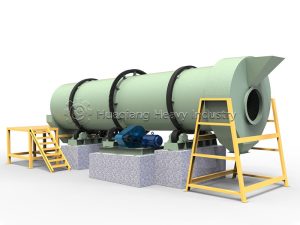
For enterprises with large production volumes, rotary drum granulators are the preferred choice due to their high output, stable operation, and suitability for large-scale NPK production lines. Small and medium-sized enterprises with moderate investment and a focus on uniform particle size can choose disc granulators, which are simple to operate and have a high granulation rate.
If producing slow-release fertilizers or fertilizers without a drying process, roller extrusion granulators can be used. This type of equipment granulates at room temperature, does not require steam, retains nutrients better, and has a smaller footprint. High-tower granulation is suitable for high-end compound fertilizers, producing products with high solubility and high market value, but requires a larger investment.
When selecting equipment for an NPK fertilizer production line, the type of raw material must also be considered. Most fertilizer granulators are compatible with conventional raw materials such as urea and monoammonium phosphate; however, if organic materials are added, a more robust mixing and granulation structure is required.
Simultaneously, attention should be paid to the configuration of supporting equipment, including whether the mixer, dryer, cooler, screening machine, and packaging machine are compatible with the fertilizer granulator. Only through reasonable selection and scientific matching can an efficient, low-consumption, and long-term stable NPK fertilizer production line be built, bringing continuous and stable profits to the enterprise.