

As a core piece of equipment in a fertilizer production line, a disc granulator has numerous rotating parts and high operating power. Improper operation can easily lead to safety accidents. Mastering scientific and safe operating procedures is key to ensuring personnel safety and stable production. Focus on the following three aspects:
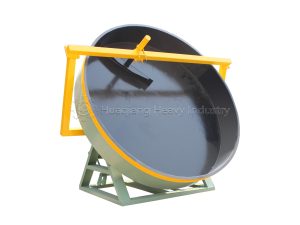 Pre-operation safety inspections are the first line of defense. Before starting the machine, thoroughly check the equipment’s condition. For the transmission system, check the lubricating oil level in the motor and reducer, replenishing if insufficient. Also, ensure that protective covers on transmission components such as pulleys and gears are intact and not loose or missing. Test the manual and electric adjustment functions of the yaw and angle adjustment devices to ensure smooth angle adjustment and avoid jamming during operation. For the spray system, check for blockages in the nozzles and leaks in the water pipes to prevent improper water spraying, which could cause material to stick to the wall and cause equipment overload. Furthermore, ensure that there is no debris around the equipment, that safety warning signs at the inlet and outlet are clearly visible, and that operators wear non-slip shoes, protective gloves, and hard hats. Loose clothing and jewelry are strictly prohibited to prevent entanglement in rotating parts.
Real-time monitoring of equipment operation is essential. When starting a disc granulator machine, follow the “no-load start” principle. Only slowly feed material after the disc is operating normally to avoid overloading and burning the motor. During operation, closely monitor the equipment for vibration, abnormal noise, and temperature. If the disc shakes violently, immediately stop the machine and inspect the base bolts for looseness. If the drive system temperature exceeds 60°C or a harsh noise is heard, this may indicate gear wear or bearing damage, requiring shutdown and maintenance. Furthermore, it is strictly forbidden to use hands or tools to clean material stuck to the wall while the machine is running. If necessary, disconnect the power supply and display a “Do Not Start” warning sign to prevent accidental operation. Furthermore, the feed rate must be uniform to avoid uneven loading of the disc, which could cause imbalance. This ensures that pellet production and equipment safety proceed in unison.
Safety maintenance after shutdown is equally critical. After shutting down, the main power supply must be disconnected. Once the disc has completely stopped rotating, any remaining material within the equipment must be cleaned, especially any adhering material between the liner and the spray nozzle, to prevent clogging or component damage upon the next startup. Liners should be regularly inspected for wear and replaced when the wear exceeds 5mm to prevent direct wear on the disc. Lubricate the angle adjustment cylinder, drive bearings, and other components with grease to maintain smooth operation. Furthermore, an equipment safety log must be established to record all inspections, maintenance, and troubleshooting. Operators must undergo regular safety training to strengthen emergency response capabilities. In the event of a power leak or personal injury, the power supply must be disconnected and emergency procedures initiated immediately, effectively minimizing safety risks.