

Technology is the primary productive force, and for NPK fertilizer production lines, continuous technological innovation is the core driving force for maintaining competitiveness and adapting to the needs of agricultural development. Currently, with the integration of technologies such as artificial intelligence, big data, and new energy, NPK fertilizer production lines are moving towards intelligence, diversification, and green development, opening up a new model for empowering future agriculture.
Intelligent upgrading has become a major trend. Future NPK fertilizer production lines will fully integrate artificial intelligence technology, using intelligent sensors to monitor parameters such as temperature, humidity, and nutrient content in real time during the production process. Combined with big data analysis, this will enable precise control, further improving production efficiency and fertilizer quality. At the same time, the application of Internet of Things technology will enable remote monitoring and fault warning of NPK fertilizer production lines, reducing operating and maintenance costs.
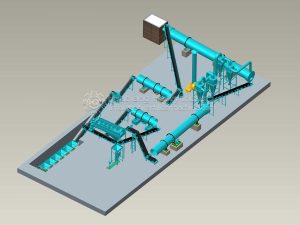
Product diversification will meet more needs. For emerging fields such as protected agriculture and organic agriculture, NPK fertilizer production lines will develop more specialized compound fertilizers, such as fertilizers for soilless cultivation and organic-inorganic compound fertilizers. Formulations will also be optimized to increase the content of trace elements, meeting the diverse growth needs of crops.
Green technologies will continue to break through. New environmentally friendly coating materials and new energy-driven technologies will be widely applied to NPK fertilizer production lines, further reducing energy consumption and pollutant emissions; resource recycling models will be further improved, achieving complete recycling of production waste and wastewater. In the future, NPK fertilizer production lines will be guided by technological innovation, promoting agriculture towards a more efficient, greener, and more sustainable direction.