

Screening, coating, and packaging are the last three processes in the NPK fertilizer production line, directly determining the finished product’s appearance, slow-release effect, and factory standards. They are crucial for achieving a closed-loop production cycle from raw materials to finished product and are an important link in increasing product added value. Following the drying and cooling process, they form a complete production chain with the fertilizer granulation unit. These three processes are interconnected, and each step requires strict standard control to ensure the finished product meets national standards.
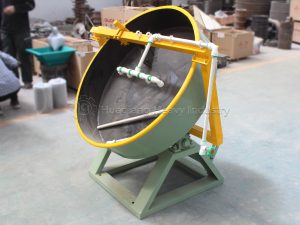
The screening process is completed by a vibrating screen, separating the dried and cooled material into three parts: qualified granules, large granules, and returned powder. Qualified granules, with a diameter of 2-4mm, enter the coating stage. Large granules are crushed and returned to the fertilizer granulator. Returned powder is recycled back into the batching system, reducing raw material waste and ensuring uniform particle size and consistent appearance in the finished product. For organic NPK fertilizer, before screening, it must be confirmed that the granules have not clumped due to insufficient composting in the fertilizer turning machine.
The coating process is mainly used in the production of slow-release NPK fertilizers. Inside the coating machine, resin or sulfur coating agent is evenly sprayed onto the surface of the granules to form a dense protective film, delaying nutrient release and improving fertilizer utilization, suitable for the needs of fruit trees, vegetables, and other cash crops. Finally, the granules enter an automated packaging system consisting of a quantitative packaging scale, a sewing machine, and a conveyor, achieving automatic weighing, sealing, and conveying. The packaging scale needs to be calibrated regularly to avoid weighing errors. This comprehensive downstream process enables the NPK fertilizer production line to achieve standardized and large-scale production, ensuring stable finished product quality and forming a highly efficient and collaborative production system with fertilizer granulators and fertilizer turning mechanisms.