

The global transformation of agricultural structure and policy orientation are profoundly reshaping the production logic of NPK compound fertilizers, thus forcing the design of production lines to evolve from “standardized mass production” to “multi-variety flexible production.”
On the one hand, the expansion of cash crop (such as fruits, vegetables, tea, and traditional Chinese medicine) planting areas has created a demand for high-concentration, trace element-added, and slow/controlled-release functional compound fertilizers. This requires NPK fertilizer production lines to have the ability to quickly switch formulas—for example, by using modular batching silos and cleanable mixing systems to avoid cross-contamination. On the other hand, the national policies of “zero growth in chemical fertilizers” and “organic substitution” have prompted enterprises to develop organic-inorganic compound fertilizers, requiring the addition of organic matter crushing, fermentation, or blending stages to the original process.
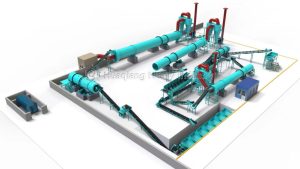
The international market also presents new challenges. Southeast Asian farmers prefer small packages of less than 25kg, the African market tends towards low-chlorine or sulfur-based products, while Europe and the United States emphasize environmental certification and carbon footprint labeling. Therefore, packaging lines need to support automatic switching of multiple specifications, and the materials of NPK fertilizer production lines need to be compatible with different raw material systems (e.g., avoiding chloride ion corrosion).
In addition, “local production and local sales” has become a cost-reduction trend, driving enterprises to build regional small and medium-sized smart factories. Although these production lines are smaller in scale (100-300 tons/day), they are highly automated and can flexibly respond to local soil and crop needs. At the same time, to cope with fluctuations in raw material prices, some companies have introduced dynamic formula systems, automatically optimizing the lowest-cost NPK combination based on the real-time prices of bulk raw materials such as urea and diammonium phosphate.
In summary, modern NPK fertilizer production lines are no longer just manufacturing units, but intelligent nodes connecting agricultural demand, resource efficiency, and market response. The future production line layout will inevitably be a multi-functional, scalable, and low-carbon comprehensive system to support high-quality agricultural development.