

The rotary screening machine is a critical piece of equipment in organic fertilizer production lines, utilized for material classification and impurity removal. Widely applied in the screening of both powdered and granular organic fertilizers, its screening efficiency directly impacts product purity and appearance. The machine offers distinct advantages, including simple operation, stable performance, and the ability to preserve the structural integrity of the granules.
A rotary screening machine primarily consists of a frame, classification hoppers, a screening drum, and a transmission mechanism. Once installed, the drum is positioned at a specific incline relative to the ground; during operation, the drum’s rotation drives the flow of material, thereby achieving classification and screening. The number of classification hoppers can be adjusted according to the requirements of the finished product: typically, two discharge ports (for fine powder and oversized granules) are configured when screening powdered fertilizers, while three ports (for fine powder, finished granules, and oversized granules) are used when screening granular fertilizers.
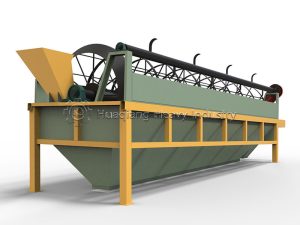
The sequence of the mesh screens affixed to the drum must be determined based on specific classification requirements. Starting from the feed end, the screens are arranged sequentially as fine mesh, medium mesh, and coarse mesh, ensuring that the material undergoes a gradual classification process from fine to coarse. Additionally, the orientation in which the screens are secured must be consistent to prevent material accumulation or blockage. Compared to vibrating screens, the rotary screening machine relies on the drum’s rotation for separation, effectively protecting the granules from structural damage; furthermore, the mutual friction between the materials during this process renders the granules smoother, thereby enhancing the overall texture and quality of the product.
When operating a rotary screening machine, it is essential to regularly inspect the screens for signs of wear and tear, and to promptly replace any damaged screens to prevent impurities from contaminating the finished product. Concurrently, the material feed rate should be carefully controlled to ensure thorough and effective screening. By utilizing the rotary screening machine correctly and efficiently, manufacturers can significantly improve product pass rates, minimize waste generation, reduce production costs, and effectively safeguard the quality and efficiency of their organic fertilizer production operations.