

New Type Organic Fertilizer Granulator
The machine is agricultural machinery research institute use years of experience on compound fertilizer processing equipment designing and production to develop the latest technology products
Model:YSL-60 Capacity:1.5-2t/h
Model:YSL-80 Capacity:2-4t/h
Model:YSL-100 Capacity:4-6t/h
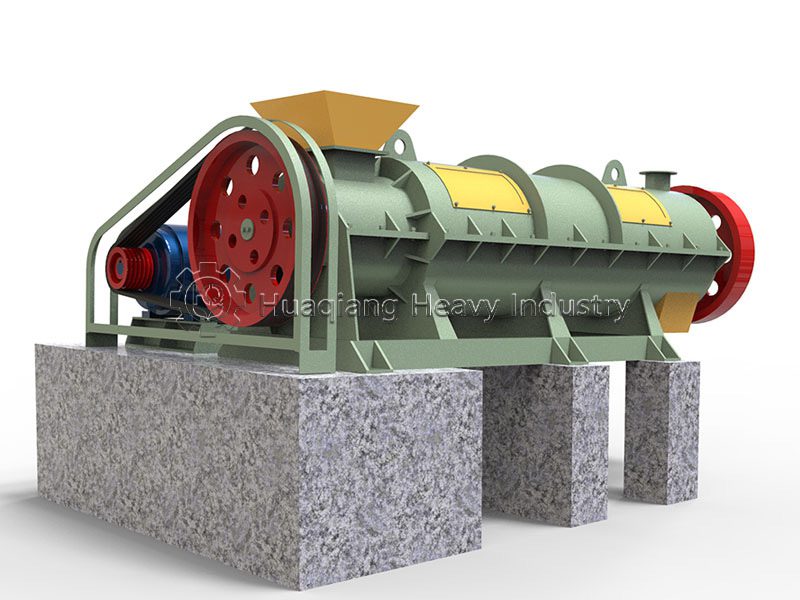
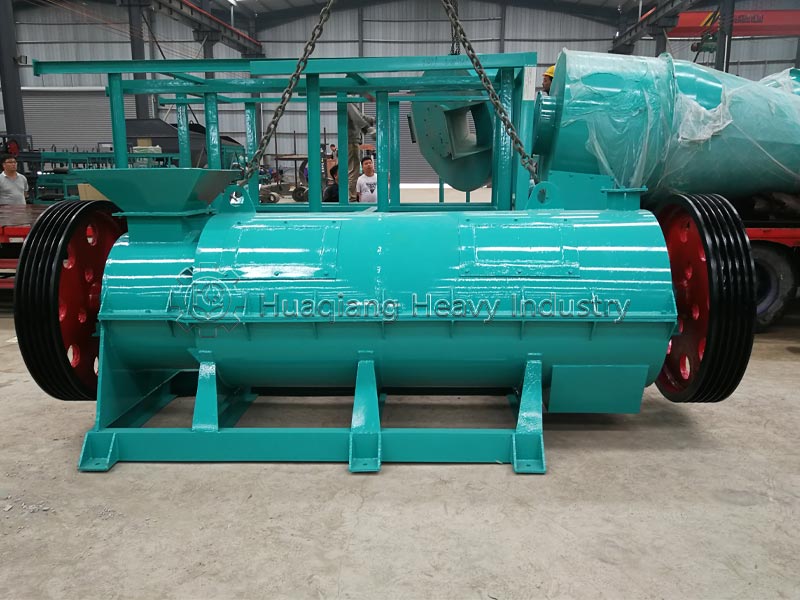
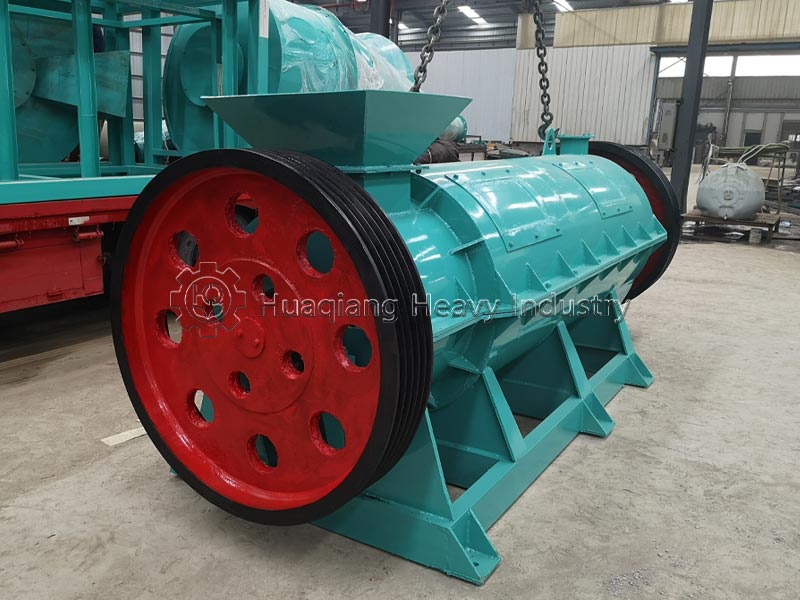
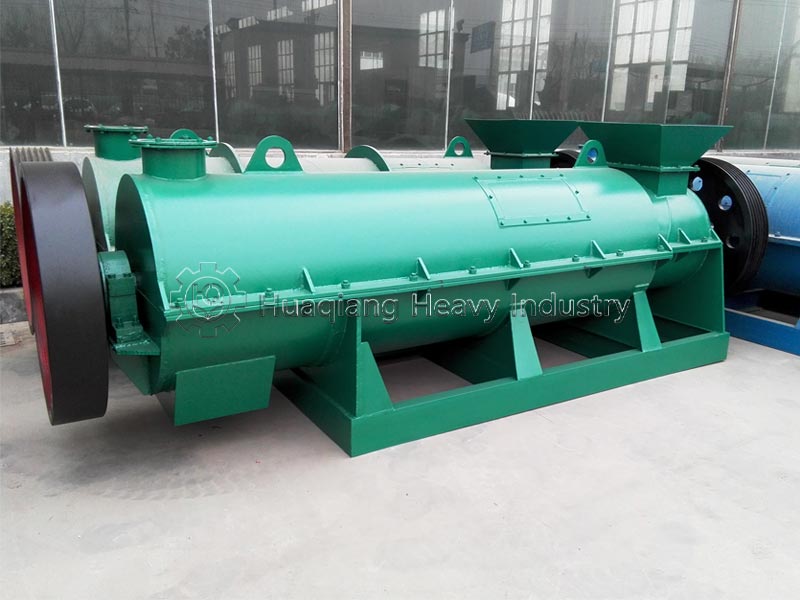
DETAILS
The new type organic fertilizer granulator (also known as a stirring-tooth granulator) is a forming device that utilizes the mechanical agitation force of high-speed rotation to continuously granulate powdered materials. By exerting shearing, extrusion, and kneading forces on the material through the high-speed rotation of its stirring teeth, the machine enables fine powders to undergo continuous mixing, granulation, spheronization, and densification, ultimately forming uniform granules.
Compared to traditional natural agglomeration granulators—such as disc or rotary drum granulators—the new type organic fertilizer granulator offers significant advantages, including a concentrated particle size distribution and ease of control. It demonstrates exceptional process adaptability, particularly when handling materials with high moisture content or high viscosity, as well as coarse-fiber materials that are otherwise difficult to granulate.
New type organic fertilizer granulators are widely used in fields such as organic fertilizer production, feed processing, biomass fuel molding, and the granulation of chemical powders. Driven by the rapid growth of the organic fertilizer and biomass energy industries, this type of granulator has become a mainstream piece of equipment in wet granulation processes.
Working Principle of the New Type Organic Fertilizer Granulator
The working principle of the new type organic fertilizer granulator can be summarized by two core processes: high-speed agitation and forced granulation.
Raw materials enter the machine through an inlet at one end, and a motor drives the rotor to rotate at high speed via a reduction gearbox. Agitation teeth mounted on the rotor—typically 4 to 8 sets of high-strength alloy steel teeth arranged symmetrically or in a spiral pattern—operate at speeds of 300 to 1,000 rpm, subjecting the material to intense shearing, mixing, and kneading. During this process, the material is repeatedly broken down, mixed, and compressed; under the combined influence of mechanical force and aerodynamic action, particles continuously collide, interlock, and agglomerate.
As the material is propelled forward along the axis of the cylinder, the granules gradually become spherical and densify through continuous agitation and rolling. Finally, they are discharged from the opposite end of the machine, completing the granulation process.
Granule size can be adjusted by controlling the material’s moisture content and the main shaft’s rotational speed: generally, lower moisture content and higher rotational speeds result in smaller granules, while the reverse yields larger granules.
Application Scope of the New Type Organic Fertilizer Granulator
Organic Fertilizer Industry
The new type organic fertilizer granulator is a core piece of equipment in organic fertilizer production lines. After undergoing fermentation, livestock and poultry manure (such as chicken, pig, cattle, and sheep manure) can be fed directly into the stirring-tooth granulator for processing. Capable of handling fermented materials characterized by high organic matter content, high fiber content, and high moisture levels, this equipment overcomes a long-standing industry challenge: the inability of traditional granulation processes to directly pelletize high-moisture fermented materials.
Biomass and Feed Industries
The stirring-tooth granulator is suitable for granulating coarse-fiber materials such as straw, sawdust, distillers’ grains, and spent mushroom substrate. It effectively pelletizes coarse-fiber raw materials that are difficult for traditional equipment to process.
Chemical and Powder Industries
The stirring-tooth granulator is also suitable for granulating lightweight, fine-powder materials. Typical materials include carbon black, white carbon black (silica), clay, kaolin, calcium carbonate, dicalcium phosphate, and molecular sieves.
A Guide to Selecting New Type Organic Fertilizer Granulators
When selecting a new type organic fertilizer granulator, it is advisable to consider the following aspects comprehensively:
Granulation Performance: Prioritize models featuring a multi-layer spiral stirring-tooth design to ensure thorough material kneading and the production of uniform, smooth granules. The machine should offer an adjustable granule diameter range, typically between 2mm and 8mm.
Material Quality of Core Components: Carefully verify the materials and manufacturing processes of key components, such as the stirring teeth and the main cylinder. The stirring teeth should be made of high-strength, wear-resistant alloy steel to extend service life and reduce maintenance costs.
On-site Inspection and Trial Runs: Before making a purchase decision, it is recommended to bring representative raw material samples to the manufacturer for an on-site trial run. Additionally, inspect the manufacturer’s production capabilities and existing operational installations.
After-sales Service: Pay close attention to the process compatibility solutions and after-sales response mechanisms provided by the manufacturer.
Avoid Low-Price Traps: Do not blindly opt for low-priced equipment; the use of inferior steel and non-standard parts can significantly increase failure rates and long-term operating costs.
PARAMETERS
| Model | Capacity (t/h) |
Output Granules Size (mm) |
Motor Power (Kw) |
外形尺寸 (毫米) |
| YSL-60 | 1-2 | 1-5 | 37 | 3700*1800*1050 |
| YSL-80 | 2-4 | 1-5 | 45 | 3700*2100*1300 |
| YSL-100 | 3-5 | 1-5 | 55 | 3750*2500*1500 |
| YSL-120 | 4-7 | 1-5 | 75 | 4900*2950*1900 |
| YSL-150 | 5-8 | 1-5 | 90 | 5000*3300*2150 |