

Rotary Drum Granulator
The shell of the machine uses special rubber slab lining or acid-resistant stainless lining board which realizes auto scar removal and de-tumor instead of traditional drawknife equipment
Model ZG1.2×4/ZG1.4×5/ZG1.6×6
Power: 5.5kw/7.5kw/11kw
Prod Capacity: 1-3/3-5/5-8
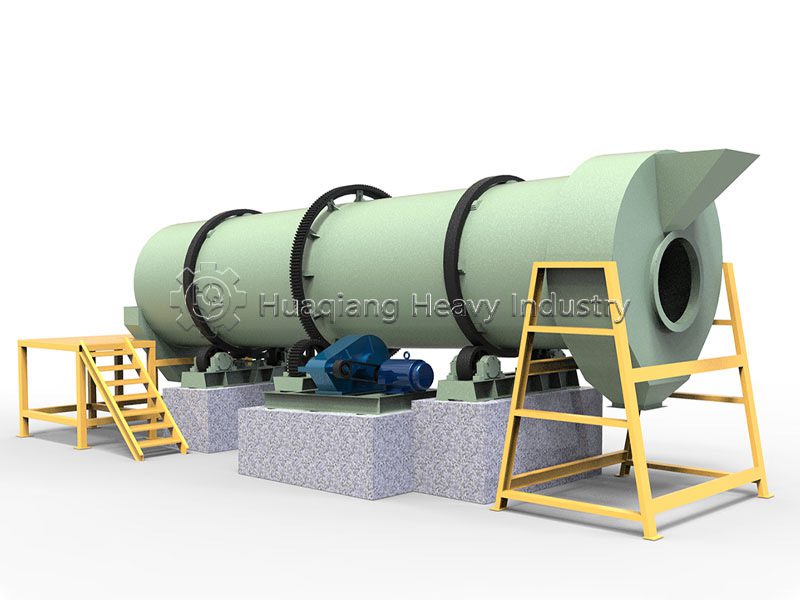
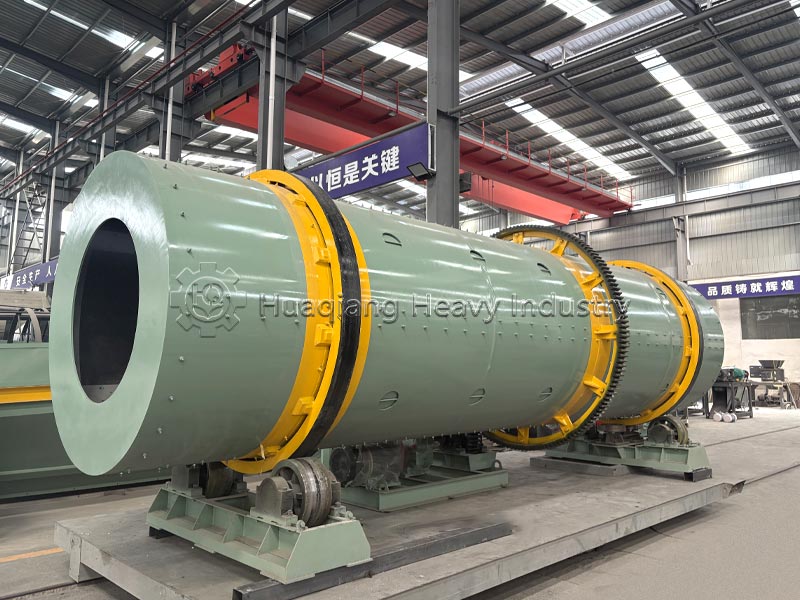
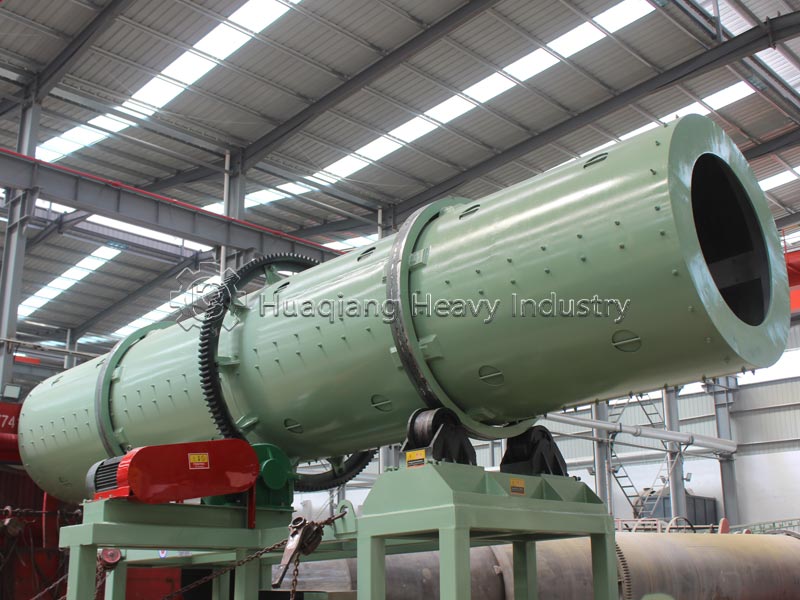
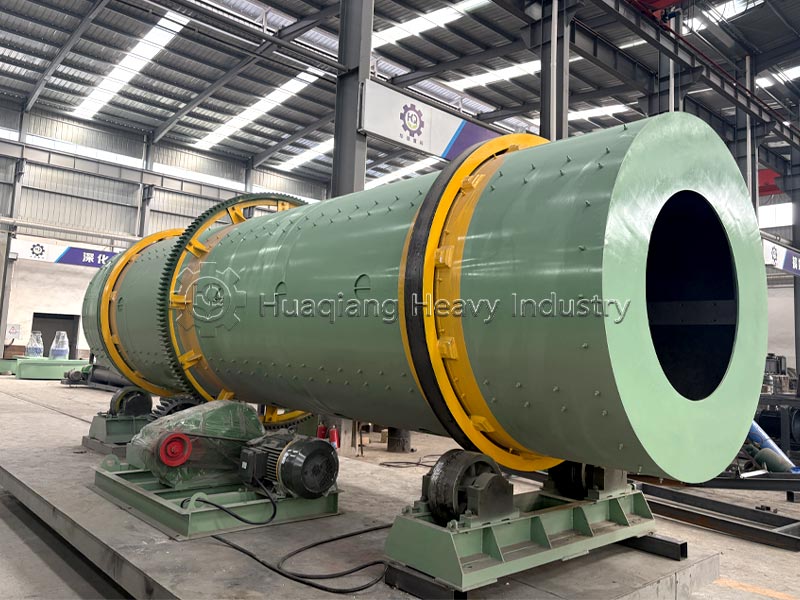
DETAILS
The rotary drum granulator is a core piece of forming equipment used in the production of compound fertilizers, organic fertilizers, and chemical granules; it is suitable for both cold and hot granulation processes and for the large-scale, continuous production of high-, medium-, and low-concentration compound fertilizers. The equipment utilizes a wet agglomeration granulation process: water or steam is introduced to adjust the moisture content of the base fertilizer materials within the drum, facilitating a full reaction, while the rotation of the drum generates the compressive forces necessary for the particles to agglomerate into spheres.
The drum is lined with rubber sheeting or acid-resistant stainless steel plates, enabling automatic removal of material buildup and eliminating the need for traditional scraper mechanisms. The unit is characterized by high granule strength, superior surface quality, corrosion resistance, low energy consumption, a long service life, and ease of operation and maintenance.
Drum granulator features:
Drum granulator structure:
strict quality control and special process requirements, in order to achieve the purpose of the use of the machine.
Working Principle of the Rotary Drum Granulator
The rotary drum granulator operates based on the principle of “rolling-agglomeration.” The equipment is driven by a main motor that transmits power via belts and pulleys to a reducer and then to a drive shaft; a split gear mounted on the drive shaft meshes with a large gear ring fixed to the drum body, thereby rotating the drum.
Once fed into the drum, the material undergoes continuous rolling and collision driven by the combined forces of centrifugal action, gravity, and friction. Internal lifting flights (lifters) continuously lift and cascade the material as the drum rotates. Simultaneously, a spraying system applies a binding agent (such as water, steam, decomposed organic liquid, or ammonium phosphate solution), causing the powdered material to gradually agglomerate into small granules. As the drum continues to rotate, these small granules adhere to surrounding powder, progressively growing to the desired size before finally discharging from the outlet. The residence time of the granules within the drum can be controlled by adjusting the drum’s inclination angle (typically 2°–5°). The continuous feeding of material and constant rotation of the drum enable large-scale, continuous production.
Application Scenarios for Rotary Drum Granulators
Compound Fertilizer Production
The rotary drum granulator is a key forming machine in the compound fertilizer industry, suitable for the large-scale production of high-, medium-, and low-concentration compound fertilizers. It accommodates flexible formulation ratios of various raw materials—such as nitrogen, phosphorus, and potassium—and allows for precise control over granule size and strength by adjusting the drum’s rotational speed, inclination angle, and liquid spray volume.
Organic Fertilizer Production
For organic raw materials with high moisture content (30%–50%)—such as livestock and poultry manure, decomposed straw, and spent mushroom substrate—the rotary drum granulator enables direct granulation without the need for extensive pre-processing or fine grinding. The granulation process is gentle, preserving the activity of beneficial microorganisms within the raw materials.
Organic-Inorganic Compound Fertilizer Production
The equipment is capable of processing complex materials, such as high-fiber straw and high-salinity organic-inorganic mixtures; an internal steam piping system utilizes low-pressure steam to soften the materials and enhance their adhesiveness.
How do you select a rotary drum granulator?
The core principle when selecting a rotary drum granulator is “process first, equipment second.” It is recommended to evaluate options based on the following factors:
Production Capacity: Determine equipment specifications based on daily and annual output requirements.
Material Characteristics: For high-moisture materials, prioritize models featuring pre-drying capabilities or steam assistance; for corrosive materials, select units with corrosion-resistant linings, such as 316L stainless steel.
Integrated Process: Consider the rotary drum granulator within the context of the entire production system to ensure compatibility with upstream batching and mixing equipment, as well as downstream drying, cooling, and screening machinery.
Operation and Maintenance: Pay attention to key maintenance aspects such as the lubrication system, bearing seals, and gear wear; regularly inspect the condition of the lifting flights (replace promptly if wear exceeds 30%).
PARAMETERS
| Model | Diameter(mm) | Length(mm) | Inclination(°) | Rotation Speed(r/min) | Capacity(t/h) | Motor Power(Kw) |
| ZG1.2*4.0 | 1200 | 4000 | 2.5 | 17 | 1-3 | 5.5 |
| ZG1.5*6.0 | 1500 | 6000 | 2.5 | 11.5 | 3-5 | 7.5 |
| ZG1.8*7.0 | 1800 | 7000 | 2.5 | 11.5 | 6-10 | 18.5 |
| ZG2.0*8.0 | 2000 | 8000 | 2.5 | 11 | 10-15 | 22 |
| ZG2.2*12 | 2200 | 12000 | 2.5 | 10.5 | 15-20 | 37 |