

As a core forming equipment in the production of organic fertilizer and compound fertilizer, the disc granulator, with its mature and stable process, is widely used in small and medium-sized production scenarios. Its process characteristics and standardized operation directly determine product quality and production efficiency, requiring close control.
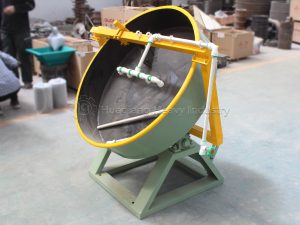
The disc granulator machine boasts outstanding process characteristics, combining practicality and economy. Firstly, it has a simple structure, is easy to operate, has low equipment purchase costs, and is easy to maintain. Ordinary workers can learn to operate it after short-term training, making it suitable for the needs of small and medium-sized cooperatives and start-ups. Secondly, it produces excellent granulation results. Through the synergistic effect of centrifugal force, friction, and gravity generated by the rotating disc, the material agglomerates and forms granules with high sphericity and good flowability, achieving a stable granulation rate of 80%-85%. Thirdly, it has wide adaptability, capable of processing various raw materials with a moisture content of 25%-35% and a fiber content of 30%-50%. It has lower requirements for raw material purity and its energy consumption is 20%-30% lower than similar equipment, effectively controlling production costs. Meanwhile, the particle size can be steplessly adjusted by changing the disc’s rotation speed and tilt angle to meet different production needs.
During operation, strict adherence to precautions is essential to ensure production safety and product quality. Before starting the machine, check the equipment status, inspect the disc liner, scraper gap, and electrical system, and ensure proper raw material pretreatment to remove impurities and control moisture content. During operation, feed at a uniform speed, maintain a reasonable material accumulation within the disc, and adjust the water spray volume and rotation speed in real time to prevent loose particles or clumping.
Furthermore, regular equipment inspections are necessary, monitoring motor and bearing temperatures, and promptly cleaning any material adhering to the disc walls to prevent equipment overload. After shutdown, thorough cleaning and maintenance are required, including flushing the equipment interior, adding lubricating grease, and checking for wear on vulnerable parts. Proper operation not only reduces equipment failures and extends service life but also improves particle forming stability, helping companies achieve efficient and safe production.