

In the production of organic and compound fertilizers, disc granulators and rotary drum granulators are the mainstream equipment for wet granulation. In contrast, double roller press granulators utilize a dry-process extrusion method, offering distinct advantages in terms of cost, raw material adaptability, and product quality. As a key energy-saving granulation solution promoted by Huaqiang Heavy Industry, these machines are highly favored by small and medium-sized fertilizer processing plants.
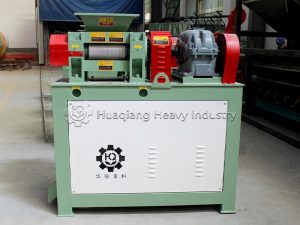
First, the double roller press granulator employs a dry-process granulation method at ambient temperature. It requires no added water and eliminates the need for a drying system, significantly reducing both initial investment and energy consumption. Disc and rotary drum granulators rely on the rolling and layering of materials, which necessitates the addition of water for moisture; consequently, they require downstream drying and cooling equipment. This results in a more complex production line with a larger footprint, as well as higher fuel and electricity consumption. Double roller press granulators, by contrast, use high-pressure extrusion to form dry powder materials directly. This bypasses the drying stage, lowering initial capital expenditure and operational energy use. Furthermore, it avoids the challenges of managing exhaust gases and dust associated with wet-process drying, making the production process more environmentally friendly with zero wastewater discharge.
Second, the resulting granules are compact and possess high structural strength, which minimizes losses during storage and transport. Granules produced via wet-process rolling tend to be porous and relatively soft; they are prone to fracturing or crumbling into dust during handling, loading, and shipping, leading to a high rate of material that must be recycled back into the process. Double roller press granulators, however, utilize high-pressure compaction between two rollers, resulting in dense, hard granules that resist pulverization. Their higher bulk density ensures greater stability during packaging, warehousing, and long-distance transport, effectively reducing material waste and ensuring consistent product quality—making them ideal for fulfilling long-distance fertilizer orders.
Third, these machines offer broader raw material adaptability and are not constrained by material viscosity. Disc and rotary drum granulators have strict requirements regarding the stickiness of raw materials; substances such as straw powder, mineral powder, inorganic salts, and low-viscosity powders are difficult to pelletize using these methods, often necessitating the addition of binders—which in turn alters the fertilizer’s original formulation. Roller extrusion granulation relies on physical pressure for shaping, eliminating the need for binders. It can process a wide range of materials—such as ammonium chloride, sodium sulfate, matured organic fertilizer, and NPK powder—offering flexible formulation adjustments for the production of various specialty fertilizers, all while ensuring product purity remains unaffected by additives.
Furthermore, the entire process is streamlined and easy to operate and maintain, making it highly adaptable to flexible production needs. In contrast, wet granulation involves a longer process with complex parameter adjustments, requiring a high level of operator experience. Roller extrusion granulation lines feature a compact design and single-step forming; material that is screened out can be immediately recycled back into the production process. The equipment boasts a low failure rate, and wear parts—such as the roller shells—are designed for quick and convenient replacement. The system supports the production of multiple product varieties in small batches, making it ideal for fertilizer plants that handle diverse and fluctuating orders; it also offers a short commissioning cycle and a faster return on investment.
While disc and drum granulators offer the advantage of producing smooth, aesthetically pleasing granules—which may cater to specific market demands—roller extrusion granulation stands out as a highly cost-effective dry granulation solution. It excels in terms of overall energy consumption, raw material compatibility, and operating costs, aligning perfectly with current industry trends toward green production, cost reduction, and efficiency enhancement.