

The chain-plate compost turner is a core piece of equipment in trough-based aerobic fermentation processes. It is widely used for the decomposition of organic materials such as livestock and poultry manure, sludge, and straw. It serves as the standard turning equipment for organic fertilizer production lines manufactured by Huaqiang Heavy Industry. By utilizing a circulating chain-plate system to scoop and toss material, the machine facilitates turning, aeration, pulverization, and displacement, ensuring stable fermentation of the compost.
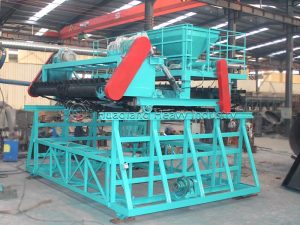
The equipment is mounted on rails running along both sides of the fermentation trough. It primarily consists of a traveling frame, a hydraulic lifting mechanism, a chain-plate turning assembly, a drive motor, and an electrical control system. Before operation, the hydraulic system lowers the chain-plate assembly so that the chain plates—equipped with digging teeth—reach the bottom of the material layer. A motor, connected to a gear reducer, drives the main shaft, causing the entire chain-plate assembly to circulate continuously, while the machine itself moves forward along the rails at a constant speed.
During operation, the teeth at the bottom of the chain plates cut into the base of the compost pile, scooping up the material and conveying it upward along the inclined chain plates. As the material is transported upward, the teeth break it apart, pulverizing any clumps and thoroughly mixing the oxygen-depleted material from the bottom with the material from the surface. Upon reaching the top of the chain-plate assembly, the material is tossed backward—falling like a waterfall back into the fermentation trough—thereby completing a single turning cycle.
This process serves several functions: as the material is tossed, it comes into full contact with the air, replenishing oxygen to support the growth of aerobic microorganisms. The turning process also removes excess moisture, regulates the temperature of the compost, and prevents the development of anaerobic odors or localized overheating. As the equipment continues to move forward, the material is systematically shifted toward the rear of the trough, creating a continuous fermentation flow: fresh material is added at the front, while decomposed (matured) material is discharged from the rear.
Once a single pass is complete, the hydraulic system lifts the chain-plate assembly, allowing the equipment to return to its starting position or shift laterally to begin a new cycle in an adjacent fermentation trough. The entire operation is continuous and stable, with a significant turning depth that ensures even deep-layer material is thoroughly agitated, leaving no “dead zones” in the fermentation process.
Compared to other types of turning equipment, the chain-plate compost turner offers lower resistance and a higher load-bearing capacity, making it ideal for deep-trench fermentation. By replacing manual labor with mechanical turning, it enables precise control over the fermentation pace and shortens the maturation cycle. This facilitates the efficient conversion of organic waste into organic fertilizer, serving as a reliable solution for large-scale organic fertilizer production and the resource recovery of solid waste.