

Mobile Belt Conveyor
Belt Conveyor is a kind of machine that to transfer the material continuously. The belt works under the effect of frictional force. It is not only the components to transfer the material, but also the components to transfer the force.
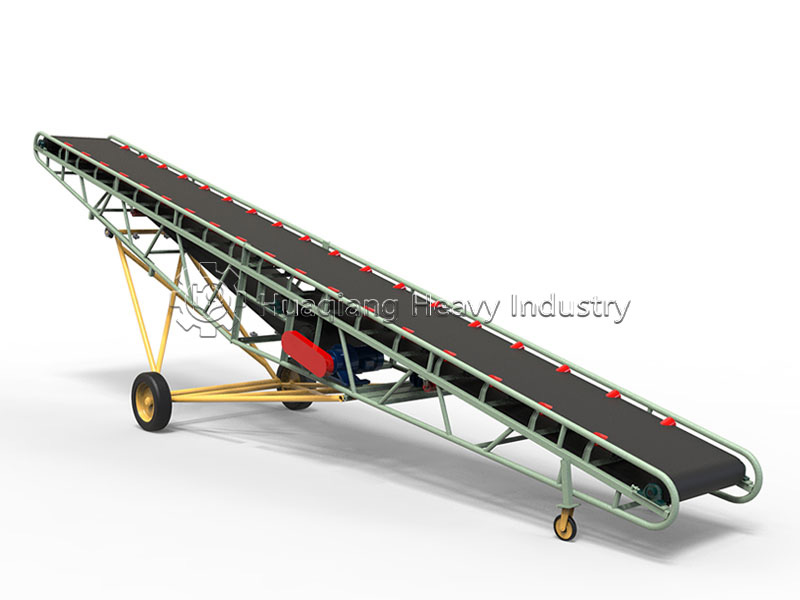
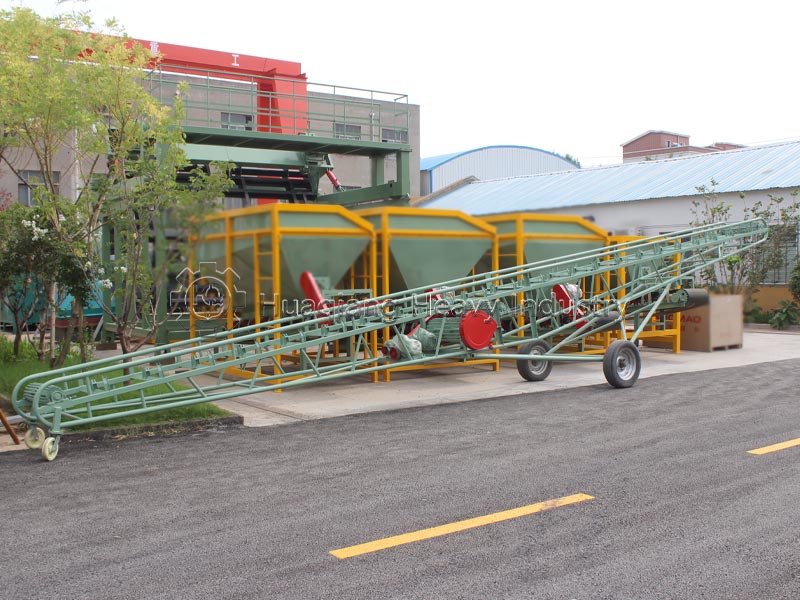
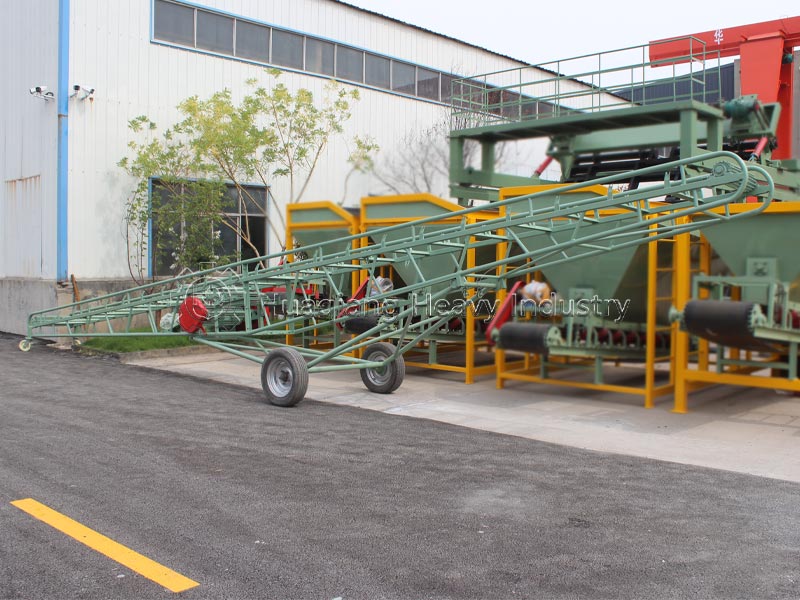
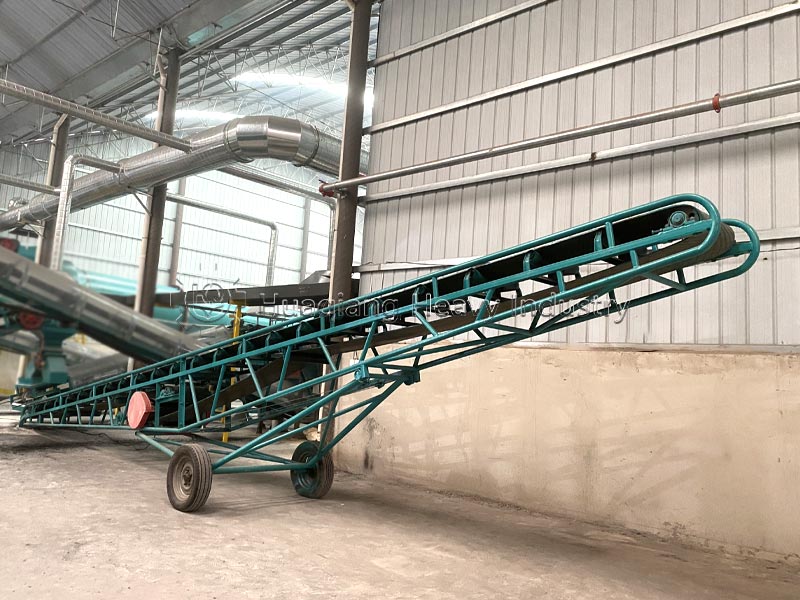
DETAILS
The mobile belt conveyor is a type of relocatable, continuous conveying machinery. Unlike stationary belt conveyors, it is mounted on a mobile chassis, allowing it to be freely repositioned according to specific loading and unloading locations. It is primarily used for the transfer, truck loading, and stockpiling of materials such as bulk organic fertilizer, sand and gravel, grain, ore, and bagged goods.
Huaqiang Heavy Industry has long specialized in complete sets of fertilizer processing equipment; consequently, many organic fertilizer plants prioritize this conveyor model for tasks involving raw material transfer and the loading of finished fertilizer products.
Structural Components of Mobile Belt Conveyors
Based on years of equipment commissioning experience, the machine’s components can be categorized into five main sections: the load-bearing conveyor unit, the power drive unit, the mobile chassis, adjustment mechanisms, and safety accessories. Wear or damage to any of these parts directly impacts the machine’s overall service life:
Conveyor Belt: Common types include standard rubber belts, chevron-pattern anti-slip belts, PVC food-grade belts, and sidewall belts. Anti-slip chevron belts are preferred for conveying moist livestock manure or wet organic fertilizer to prevent material slippage during inclined transport.
Roller Assembly: The drive roller delivers power; the bend pulley adjusts the belt’s path; and the tail tensioning roller regulates belt tension to prevent mistracking.
Idler Set: Upper idlers support the load, while return idlers support the empty belt. In environments with high levels of fertilizer dust, sealed, dust-proof idlers are recommended to minimize bearing seizure.
Drive Unit: Typically equipped with a motor-gearbox assembly; models designed for field operations without a power supply can be fitted with a diesel engine.
Mobile Chassis: Features include pneumatic swivel casters, solid load-bearing wheels, and steering handles. Large, heavy-duty models are equipped with braking supports to lock the wheels and prevent the equipment from sliding during operation.
Adjustment Mechanisms: Hydraulic lifting supports adjust the discharge height, while a telescopic frame allows for the adjustment of the conveyor’s total length to suit loading requirements for trucks of various heights.
In which industries are mobile belt conveyors used?
Mobile belt conveyors offer high mobility and can be deployed at sites where loading and unloading points frequently change:
Organic and compound fertilizer plants: transporting raw materials such as livestock manure and crop stalks, and loading granular fertilizers or bagged finished products onto vehicles;
Sand and aggregate yards, construction sites, and mines: short-distance transport and stockpiling of sand, crushed stone, and soil;
Grain depots and farms: handling grain and animal feed;
Ports, logistics yards, building material plants, and waste processing facilities: transporting bulk materials.
Why Choose a Mobile Belt Conveyor?
The core advantage of a mobile belt conveyor lies in the seamless combination of mobility and flexibility. This is demonstrated in the following aspects:
Flexible, mobile operation. Equipped with wheels (either pneumatic tires or steel wheels) at the base, the unit can be easily repositioned based on material placement. When loading or unloading locations change, there is no need for disassembly or reassembly; the conveyor can simply be pushed into place, significantly reducing transition times between tasks.
High load capacity and long service life. Utilizing high-precision hardened gear technology, the load capacity is two to three times greater than that of traditional soft-surface gears, and the service life can reach up to 10 years. The compact design reduces the required footprint by over 50% and cuts both weight and volume by half.
Adjustable inclination and high adaptability. Models exceeding 10 meters in length feature adjustable inclination angles to meet varying height requirements for loading and unloading. Some models are equipped with side guides and adjustment handles to effectively prevent material spillage during transport.
Enhanced operational efficiency. Compared to traditional stationary conveyors, mobile belt conveyors significantly reduce waiting times and labor costs associated with material transfer, making them particularly suitable for operations involving frequent, short-distance transfers.
PARAMETERS
| Length | -6(-10)M | -6(-10)M | -6(-10)M | -10(11-)M | -10(11-)M | -10(11-)M |
| Width | 500 | 650 | 800 | 500 | 650 | 800 |
| Height | 80 | 80 | 100 | 0 | 0 | 0 |
| Power | 2.2(3) | 3(4) | 5.5(7.5) | 3(4) | 3(4) | 5.5(7.5) |
| Rotation Speed | 72 | 72 | 55 | 55 | 55 | 55 |
| Transport volume | 7-10 | 10-18 | 15-20 | 10-19 | 13-25 | 20-45 |
| Angle | 20-60 | 20-60 | 20-60 | 0-23 | 0-23 | 0-23 |
| Transmission mode | Direct connection of reducer | Direct connection of reducer | Direct connection of reducer | Trigonometric belt | Reducer chain | Reducer chain |