

In the production processes of industries such as organic fertilizer, chemical, and metallurgy, disc granulators serve as core forming equipment. Their advantages, including simple structure, convenient operation, and high granulation rate, have made them the preferred choice for many enterprises. They can transform powdery materials into uniform granules, realizing the resource utilization of raw materials and promoting improved production quality and efficiency.
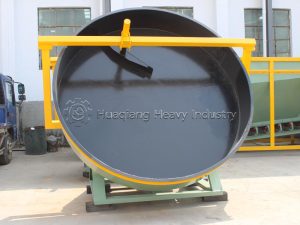
The disc granulator has a compact structure, consisting of five core parts: a granulating disc, a transmission system, a feeding device, a spraying device, and a frame base. The granulating disc, as the core component, adopts an arc-shaped design and is typically made of stainless steel or wear-resistant steel plate. Its inclination angle can be flexibly adjusted between 30° and 50°, directly determining the granulation effect. The transmission system consists of an energy-saving motor and a reducer, with adjustable speed to adapt to different granule size requirements.
Its working principle is simple and efficient. Driven by the transmission system, the disc rotates at a uniform speed. Powdered material is evenly fed in through the inlet and tumbles and agglomerates under the combined action of centrifugal force and friction. The spraying device simultaneously sprays clean water or a binder, causing the material to gradually agglomerate into small particles. These small particles continuously absorb raw materials and grow larger, eventually being discharged from the outlet once they reach the required standard, completing the transformation from powder to granules.
The disc granulator machine boasts significant advantages, with a granulation rate generally exceeding 85%, and high-quality models even surpassing 95%, effectively reducing material waste. It is adaptable to a variety of raw materials, efficiently processing both organic fertilizer materials such as livestock manure and straw, and industrial raw materials such as coal powder and cement. Simultaneously, it features low energy consumption, convenient maintenance, and few vulnerable parts, allowing beginners to quickly learn and significantly reducing enterprise operating costs.
Today, with the deepening of environmental protection concepts, the disc granulator plays a crucial role in the resource utilization of waste, especially in the field of organic fertilizer production, helping to achieve the recycling of waste such as livestock manure, which is both environmentally friendly and creates economic value. As a highly cost-effective molding equipment, it is providing strong support for green and efficient production in various industries.