

Answer: The pelletization rate of a disc granulator is a key indicator of granulation performance; it is primarily influenced by three categories of factors—equipment parameters, material properties, and operational processes—and directly determines the quality and output of the formed granules.
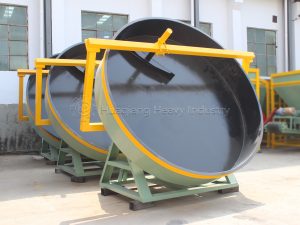
First are the operating parameters of the disc granulator. The disc inclination angle is critical; if the angle is too shallow, material tends to accumulate and slip, whereas if it is too steep, the material’s residence time is too short for proper formation. Generally, the angle should be controlled between 45° and 60° to suit most materials. Next is the disc rotation speed; if the speed is too low, the material does not tumble or mix sufficiently, while excessive speed causes granules to be flung out before they can agglomerate. Speed must be dynamically adjusted based on material particle size. Additionally, the flatness of the disc surface and the cleanliness of the scraper affect pelletization; material buildup or encrustation on the disc surface disrupts the material’s rolling trajectory, significantly reducing the pelletization rate.
Second are the material’s inherent characteristics. Greater uniformity in particle size leads to better bonding and formation; materials with a mix of coarse and fine particles are prone to forming hollow or fragile pellets. Moisture content is a crucial factor; if moisture is too low, the powder cannot bind into pellets, whereas excessive moisture causes granules to stick together and clump. Moisture levels must be precisely controlled based on the specific material type. Furthermore, material viscosity and mix proportions affect formation stability; materials with moderate viscosity generally yield higher pelletization rates.
Finally, operational processes play a vital role. The method of water spraying and the uniformity of material feeding are essential; continuous, uniform feeding and atomized spraying allow the material to coat and form effectively, whereas intermittent feeding or uneven spraying leads to inconsistent pellet sizes and increased residual material. Moreover, the feed rate must match the disc granulator‘s capacity; overloading hinders proper material tumbling, while underloading or running empty results in low formation efficiency.