

Disc granulators are widely used in the production of organic fertilizers, compound fertilizers, and powdered ores due to their simple structure, uniform granulation, and ease of operation. However, low granulation rates and loose, fragile granules are common issues that directly impact product quality and production efficiency. By optimizing raw material processing, equipment parameters, operational procedures, and routine maintenance, one can effectively enhance granulation rates and granule strength, ensuring stable and efficient production.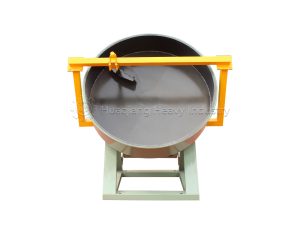
Raw material pretreatment is the foundation for improving quality and efficiency. Uneven particle sizes, excessive impurities, and unbalanced mixing ratios directly hinder granulation and result in loose granules. Before production, raw materials must undergo crushing and screening to ensure a fine, uniform powder and to prevent large lumps from interfering with the granulation process. Additionally, binders should be scientifically proportioned; additives such as bentonite or starch solution are incorporated based on material characteristics to enhance the binding force of the powder. Strict control of raw material moisture content is essential: insufficient moisture prevents agglomeration, while excessive moisture leads to material sticking to the disc and clumping. Stable moisture content is a prerequisite for achieving high granulation rates and strong granules.
Precise adjustment of equipment parameters is crucial. The disc inclination angle, rotational speed, and material residence time directly determine granulation performance. In standard operations, the inclination angle is typically set between 35° and 55°, and the rotational speed is maintained at 15–25 rpm. An angle that is too shallow causes material accumulation and stagnation, while an angle that is too steep leads to rapid discharge and the formation of small, loose granules. Extending the material’s residence time in the disc allows for multi-layer rolling and compaction, significantly increasing granule hardness. Furthermore, the scraper gap should be adjusted to 8–12 mm, and material adhering to the disc bottom must be cleared promptly to prevent accumulation, clumping, and uneven granulation.
Standardized operational procedures ensure continuous improvement in granulation quality. A progressive granulation process—incorporating “pre-mixing and humidification, constant-speed feeding, and graded material recycling”—is recommended. Raw materials are pre-mixed thoroughly before being fed into the disc at a constant rate, while an atomizing spray system ensures precise humidification to avoid localized moisture imbalances. Leveraging the self-classifying characteristics of the disc, fine powder and unpelletized particles are returned to the pan to serve as seed nuclei, thereby enhancing the overall pelletization rate and particle uniformity. Simultaneously, spray uniformity is strictly controlled to prevent issues such as localized over-wetting (leading to pellet disintegration) and uneven moisture distribution (resulting in insufficient strength).
Routine equipment maintenance is essential for stable production. Regular inspections for disc wear, nozzle clogs, and scraper deformation—followed by timely repairs and part replacements—ensure operational stability. Promptly clearing residual material after production prevents hardening that could compromise subsequent granulation performance. Through comprehensive process optimization, the disc granulator’s pelletization rate can be effectively improved, yielding dense, uniform pellets with compliant hardness, significantly reducing the rate of fines (powdering) in the finished product, and enhancing market competitiveness.