

A: The disc granulator primarily utilizes a wet agglomeration granulation process. It is compatible with various powdery and fine-grained materials—particularly those with moderate moisture content and good adhesiveness—and is widely used in sectors such as organic fertilizer, compound fertilizer, and industrial/mineral powder processing. It offers broad material compatibility and exceptional practicality.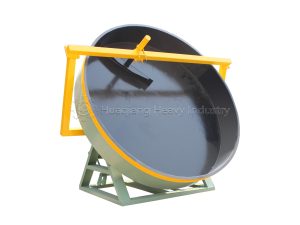
Organic fertilizer raw materials are its primary application. These include livestock and poultry manures (such as cow, sheep, and chicken manure) and agricultural/forestry wastes (such as straw powder, sawdust, spent mushroom substrate, biogas residue, sludge, and humus soil). These materials are loose in texture and highly plastic; when mixed with water, they develop sufficient adhesiveness to form round, uniform granules quickly and with a high yield, making the disc granulator a mainstream choice for organic fertilizer production lines.
Chemical and fertilizer powders are also suitable; fine materials such as powdered compound fertilizer, urea powder, phosphate and potash fertilizers, lime powder, and bentonite can be processed into uniform, compact, and well-shaped granules that meet processing and formulation requirements. Additionally, industrial fine powders—including mineral powder, coal dust, clay, and kaolin—can be granulated using this equipment, making it adaptable to various industrial processing scenarios.
Conversely, the machine is unsuitable for dry, hard lumps, non-adhesive ultrafine powders, or hard crushed stone particles, as these are difficult to agglomerate. Materials with excessive moisture content that are sticky or prone to clumping tend to adhere to the disc or cause blockages, thereby reducing production efficiency; such materials require drying or moisture adjustment before use. Overall, the disc granulator machine is suitable for processing virtually any powdery material that can be moisture-adjusted and possesses a certain degree of adhesiveness.