

In production sectors such as organic fertilizer, animal feed, and biomass fuel, the performance of pelletizing equipment directly determines the quality of the finished product and production efficiency. Thanks to their simple structure, high adaptability, and excellent cost-performance ratio, flat-die pellet machines have become the preferred choice for small and medium-sized enterprises. They effectively resolve common issues associated with traditional equipment—such as high energy consumption, poor pellet formation, and complex maintenance—thereby improving quality and reducing costs in pellet production.
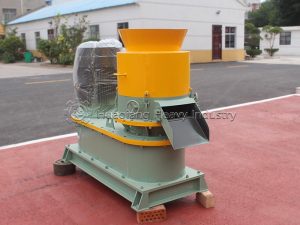
High-quality pellet formation and high material utilization are the core strengths of flat-die pellet machines. Utilizing an extrusion process, the equipment completes pelletization in a single pass, achieving a pellet formation rate of over 90%—far exceeding that of standard pelletizing equipment. The resulting pellets are uniform in size, structurally dense, and moderately hard, with smooth, clean surfaces; they resist breakage and crumbling during transport, stacking, and storage, significantly minimizing material loss. Furthermore, the low-temperature pelletizing process preserves the material’s nutritional content—making it particularly suitable for organic fertilizer and feed production—which greatly enhances product quality and market competitiveness.
Exceptional material adaptability allows for greater production flexibility and diversity. Unlike specialized pelletizing equipment with limited capabilities, flat-die pellet machines have minimal raw material requirements. They can process a wide range of materials—including straw, sawdust, livestock manure, and mineral powder—accommodating various coarse fibers and powdery substances across a broad moisture content range without the need for complex pre-treatment. By simply changing dies with different aperture sizes, manufacturers can produce pellets of various specifications and easily switch production formulas to meet diverse market demands; this versatility significantly broadens the scope of production operations.
Simple maintenance and low operating costs help enterprises reduce expenses and boost efficiency. Flat-die pellet machines feature a compact design with fewer transmission components; their purchase price is only about one-third that of ring-die equipment, resulting in a lower initial investment. The equipment boasts low energy consumption—requiring less electricity per ton of material—offering significant long-term energy-saving advantages. Key components like pressure rollers can be refurbished and reused multiple times, and die replacement is quick and affordable. Routine maintenance involves only simple tasks like cleaning die holes and checking parts, eliminating the need for dedicated operators and substantially cutting labor and maintenance costs.
Furthermore, the equipment is easy to operate and runs reliably; its intuitive, intelligent control panel allows even novices to get up to speed with minimal training, making it well-suited for small-to-medium-scale production lines. It operates quietly, has a compact footprint, and ensures dust-free production, thereby meeting environmental standards. Overall, the flat-die pellet machine stands out as an excellent choice for enhancing quality and efficiency in the pellet processing industry, thanks to its superior performance, high efficiency, energy-saving capabilities, and ease of use.