

Flat Die Pelleting Machine
the machine is agricultural machinery research institute use years compound fertilizer processing equipment design, production experience developed in the latest technology products
Model: KP-400/KP-600/KP-800
Power: 30/55/75
Capacity: 1.8-2.5/2.5-3.5/4-5
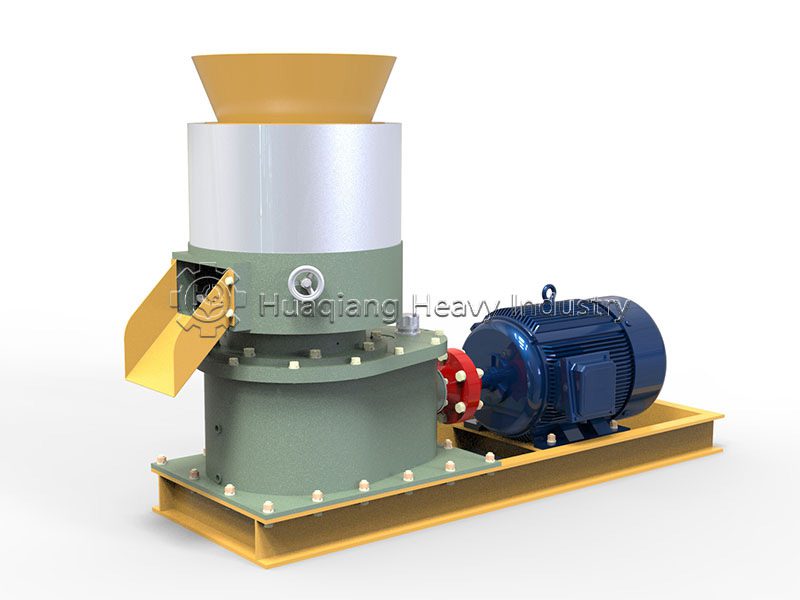
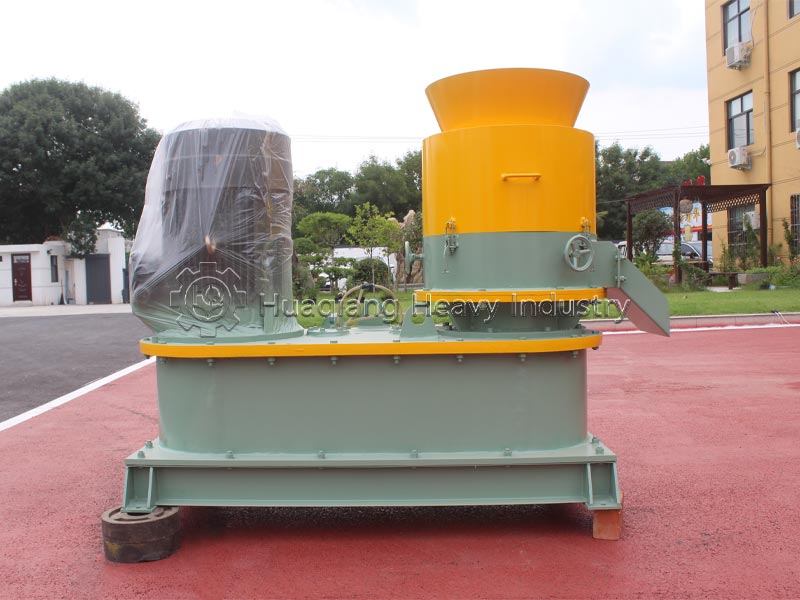
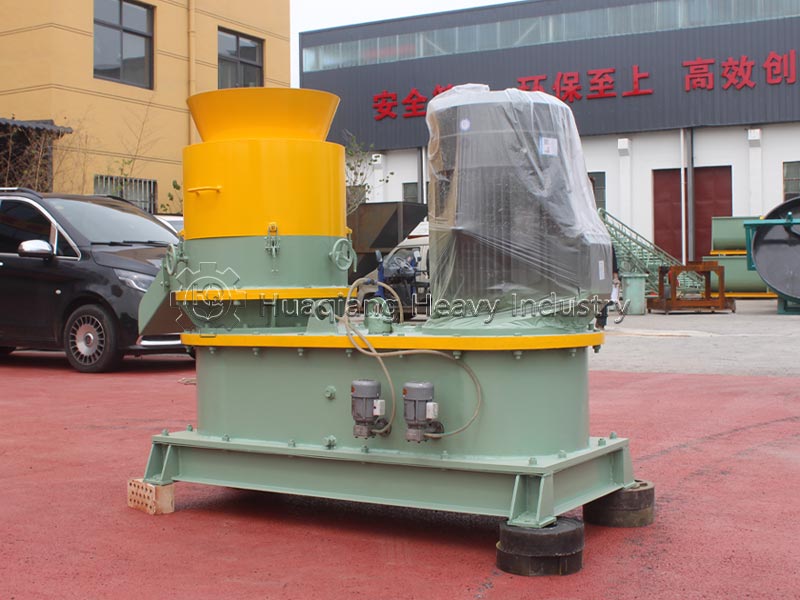
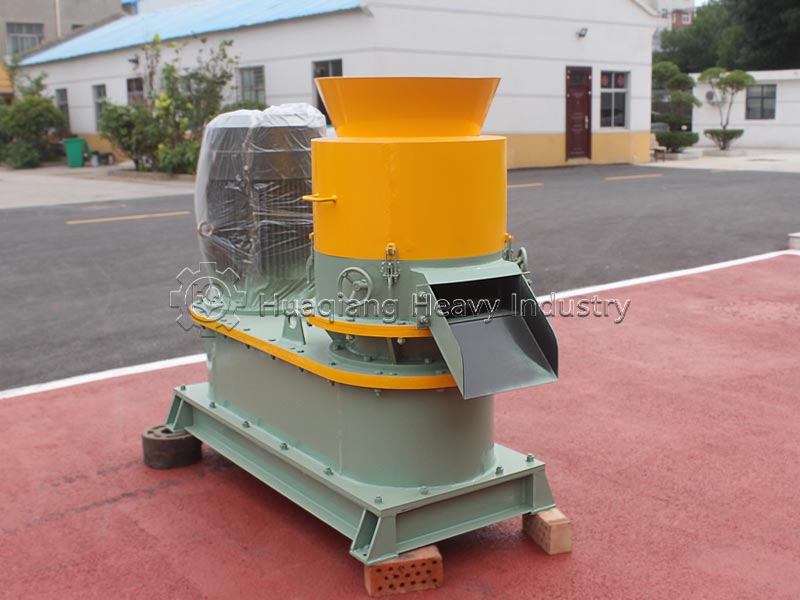
DETAILS
The flat-die pellet machine is a piece of machinery that utilizes extrusion technology to process powdered or fibrous materials into cylindrical granules. Classified as dry granulation equipment, it is primarily used in sectors such as organic fertilizer production, feed processing, and biomass fuel manufacturing.
The equipment shapes the material through the interaction between pressure rollers and a flat die, employing physical extrusion; it forms dense granules relying solely on the material’s inherent intermolecular forces, without the need for added binders.
Components of the Flat Die Pellet Machine
The flat die pellet machine primarily consists of the following components:
Machine Body and Base: The mounting foundation for all components; manufactured using a casting process to ensure stability.
Drive System: Includes the motor, gearbox, pulleys, and other parts that provide power to the equipment.
Feeding Mechanism: Located at the top of the machine body; responsible for delivering material into the pelletizing chamber.
Flat Die (Template): A perforated steel plate through which material is extruded under pressure to form pellets.
Pressure Rollers: Roll over the flat die, forcing the material into the die holes.
Main Shaft and Transmission Assembly: Connects the motor to the pressure rollers and transmits power.
Cutter and Discharge Mechanism: Cuts the extruded cylindrical material into pellets and discharges them.
Applications of Flat-Die Pellet Machines
Characterized by high versatility, low investment costs, and excellent cost-effectiveness, flat-die pellet machines are widely used in four key sectors: livestock and poultry farming, biomass energy, organic fertilizer processing, and the recycling of agricultural by-products. They serve as essential equipment for niche resource-recovery ventures and supplementary processing operations.
Organic Fertilizer Processing
Processes raw materials such as livestock manure, crop stalks, and humus soil into organic fertilizer pellets. These pellets are uniform, offer long-lasting fertilizing effects, and are easy to package and transport; they are ideal for production on family farms and in small-scale organic fertilizer plants, enabling the resource-efficient recycling of farming waste.
Biomass Fuel Industry
Converts waste sawdust, crop stalks, and agricultural/forestry residues into high-density biomass fuel pellets. These serve as clean fuel sources for boiler heating, industrial combustion, and residential heating, aligning with current environmental protection and resource-recovery policies.
Livestock and Poultry Farming
Capable of producing specialized compound feed pellets for pigs, chickens, ducks, geese, cattle, sheep, fish, and shrimp, meeting the daily production needs of small-to-medium-sized farms and family-run operations.
Agricultural By-product Recycling
Processes agricultural waste—such as rice bran, corn cobs, distillers’ grains, and herbal medicine residues—into feed or fuel pellets.
Why Choose a Flat Die Pellet Machine?
The flat die pellet machine has become core equipment for small- and medium-sized organic fertilizer and animal feed production lines, primarily due to the following advantages:
Low investment cost: It features a simple structure and a compact footprint, with a lower purchase price compared to similar granulating equipment.
Wide raw material adaptability: It can process various organic fertilizer materials—such as composted manure, straw powder, spent mushroom substrate, and humus—with minimal requirements regarding moisture content and particle fineness. Raw materials do not need drying or pulverizing prior to granulation; direct batching allows for the production of cylindrical granules, resulting in significant energy savings.
High granulation rate: The granulation rate exceeds 95%, producing dense, high-strength granules that resist breakage or crumbling during transport and storage.
Ease of operation: It features one-touch start/stop functionality and an intuitive control panel, allowing operators to use the machine without specialized training.
Low operating costs: Low energy consumption and simple maintenance; routine upkeep requires only periodic cleaning of die holes and lubrication.
Low-temperature granulation: The process generates minimal heat, effectively preserving the internal nutrients of the raw materials—making it ideal for temperature-sensitive products like bio-bacterial fertilizers.
Why Choose Huaqiang as Your Flat Die Pellet Machine Manufacturer?
Among the many granulator brands available, Huaqiang Machinery has dedicated over two decades to the R&D and manufacturing of granulation equipment. Specializing in custom-made granulators for organic fertilizer, animal feed, and biomass, the company has established a strong reputation in the industry thanks to its robust manufacturing expertise, reliable equipment performance, and comprehensive after-sales service.
PARAMETERS
| Model | KP-210 | KP-260 | KP-400 | KP-500 |
| Capacity (t/h) | 0.2-0.3 | 0.4-0.5 | 1-1.2 | 2-5 |
| Pelleting Rate (%) | >95% | >95% | >95% | >95% |
| Rotation Speed(r/min) | 370 | 260 | 260 | 125 |
| Power(Kw) | 7.5 | 11 | 30 | 55 |