

Hydraulic Roller Granulator
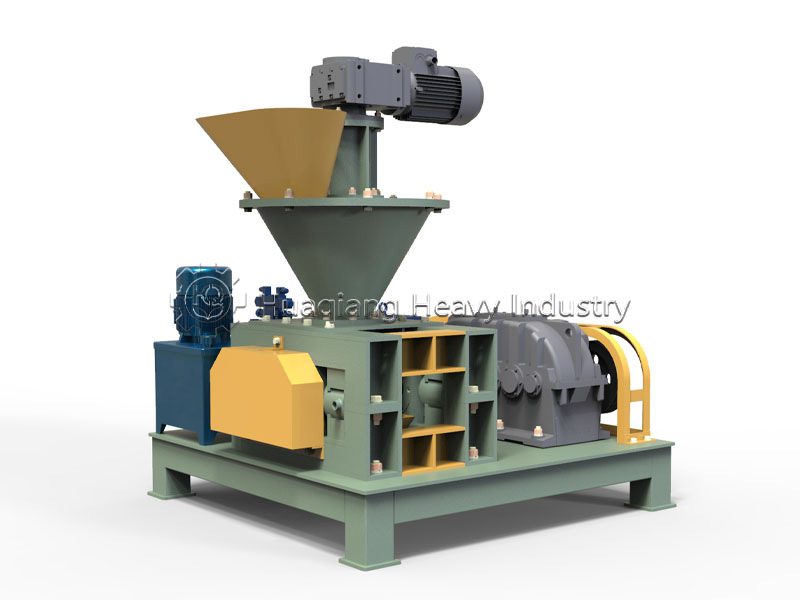
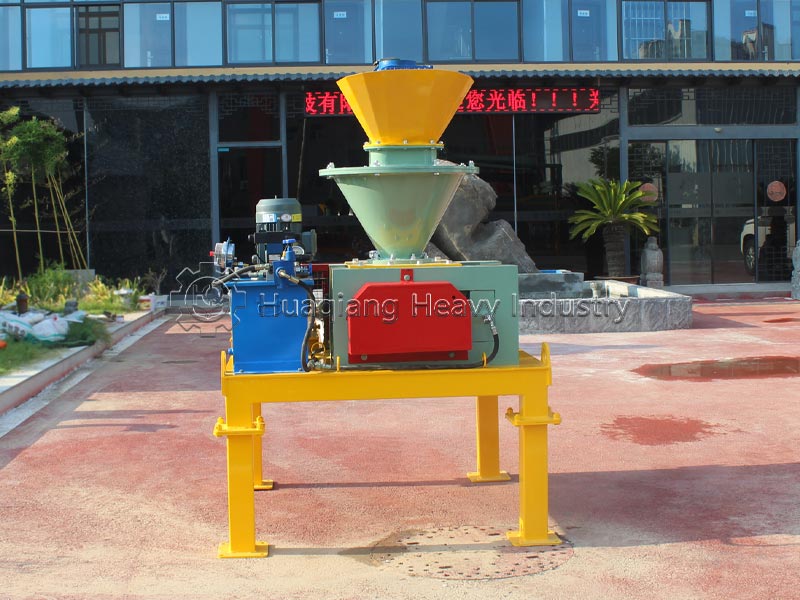
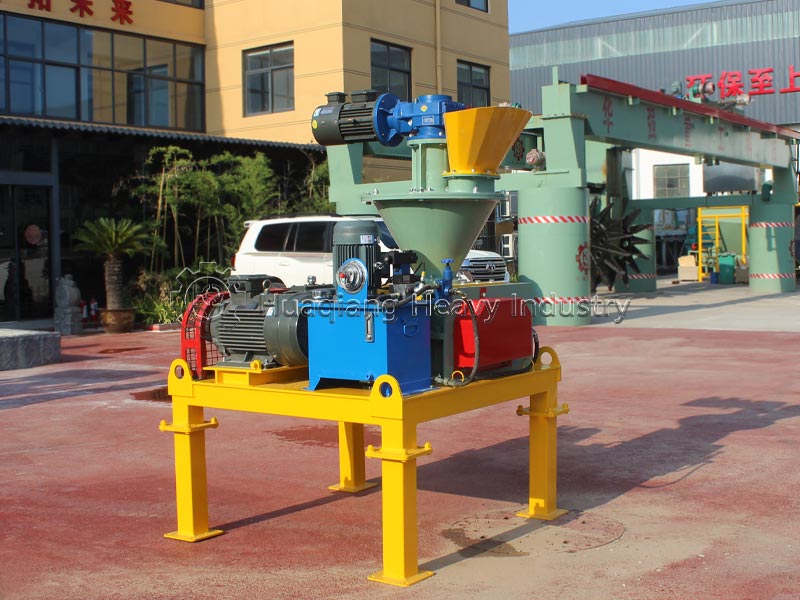
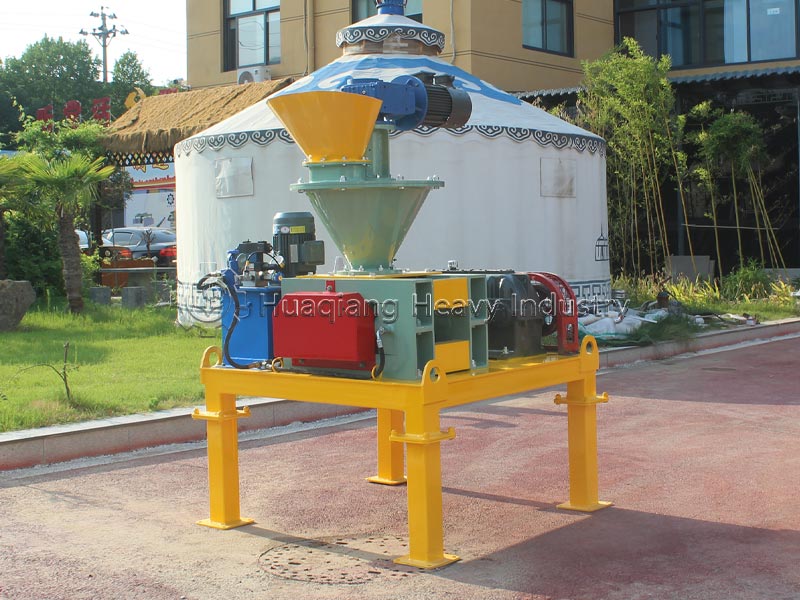
Our company are professional fertilizer production equipment manufacturer, after many years of research experience designing the hydraulic type roller press granulator, compound fertilizer powder granulator.
Model:DGZ-1 Capacity:1-1.5t/h Power:15kW
Model:DGZ-2 Capacity:2-3t/h Power:30kW
Model:DGZ-3 Capacity:3-4.5t/h Power:37kW
DETAILS
The hydraulic double roller granulator is a forming machine that utilizes the principle of extrusion to process powdered materials into granules of specific shapes. It applies high pressure to the material via two counter-rotating rolls, compressing and shaping the material within the grooves on the roll surfaces to produce granules characterized by high strength and uniform particle size.
Unlike traditional wet granulation or agitation granulation methods, the hydraulic roller granulator employs a dry extrusion process; it requires no binders or drying stages, thereby significantly simplifying the production workflow and reducing both energy consumption and operating costs.
How does a hydraulic roller granulator work?
Understanding the equipment’s operating principle is essential for proper selection and efficient use. The entire workflow of a hydraulic roller granulator can be divided into the following key stages:
Quantitative Feeding Stage
Powdered material is continuously and evenly fed into the granulator’s inlet via a screw feeder or belt conveyor.
Pre-compression and De-aeration Stage
As the material enters the wedge-shaped zone between the two rolls, the rotation of the rolls gradually compresses the material and expels air from the voids between particles.
High-Pressure Forming Stage
When the material reaches the point of minimum clearance between the rolls (the roll gap), the immense pressure applied by the hydraulic system—typically ranging from 10 to 30 tons, depending on material properties—forces the material into the semi-circular or elliptical grooves on the roll surfaces, shaping it into granules.
Demolding Stage
As the rolls continue to rotate, the formed granules are released from the grooves, falling out under the influence of gravity or being removed by a scraping device.
It is worth noting that the hydraulic system plays a crucial role throughout this process. If hard foreign objects are encountered or the material load suddenly spikes, the hydraulic cylinder’s automatic retraction function instantly widens the roll gap to protect the rolls from damage; once the anomaly is cleared, the system automatically resets, ensuring production continuity and equipment safety.
What are the applications of the hydraulic roller granulator?
Thanks to key advantages such as binder-free operation and compatibility with a wide range of materials, Huaqiang’s hydraulic roller granulator is widely used across various industries:
Fertilizer production — Capable of processing raw materials such as potassium sulfate, potassium chloride, urea, potassium nitrate, monoammonium phosphate (MAP), diammonium phosphate (DAP), and ammonium bicarbonate. It is suitable for the dry granulation of organic fertilizers, compound fertilizers, and blended fertilizers.
Chemical raw material processing — Compatible with powdered materials such as antioxidants, zinc oxide, metal powders, biomass fuel, silica black (precipitated silica), calcium aluminate, phosphogypsum, and desulfurization gypsum.
Environmental protection and solid waste resource recovery — Can compress industrial wastes—such as fly ash, sludge, and slag—into granules, enabling the resource utilization of waste materials.
Mining and metallurgy — Processes materials such as phosphate rock powder, metal powders, and steelmaking additives.
Feed processing — Meets granulation requirements for materials such as feed additives.
Additionally, the equipment is suitable for industries with strict product purity requirements, such as pharmaceuticals and food additives. It offers exceptional versatility, allowing for flexible switching between different materials without the need for equipment modification.
As the fertilizer industry moves toward standardization and enhanced efficiency, hydraulic roller granulators are becoming key equipment for the transformation and upgrading of agricultural input enterprises, thanks to their core advantages: stable high-pressure operation, energy efficiency, convenience, and broad adaptability. Whether for low-cost production by small enterprises or large-scale processing by major firms, selecting the right model not only resolves pollution issues associated with powder stockpiling but also enables resource recycling and reduces operating costs. Zhengzhou Huaqiang Heavy Industry Technology Co., Ltd. is dedicated to providing customers with one-stop services—ranging from equipment selection and production line design to installation and commissioning—thereby helping enterprises achieve their goals of improved quality, enhanced efficiency, and green development.
PARAMETERS
| Model | DGZ-1 | DGZ-2 | DGZ-3 | |
| Capacity | 1-1.5t/h | 2-3t/h | 3-4.5t/h | |
| Granulator rate | ≧85% | ≧85% | ≧85% | |
| Power | 15kW | 30kW | 37kW | |
| Material moisture | 2%-5% | |||
| Granulation temperature | Normal temperature | |||
| Particle | Diameter | 4-10(mm) | ||
| Strength | 6-20N(Compression crushing) | |||
| Shape | Oblate sphere | |||