

In the current era of rapid development in green agriculture, organic fertilizer is widely promoted due to its advantages of environmental protection, soil nourishment, and quality improvement. The organic fertilizer compost turner is a core piece of equipment for the large-scale, standardized production of organic fertilizer, directly determining the speed of compost fermentation and the quality of the finished fertilizer. It is a key tool for the resource utilization of organic waste.
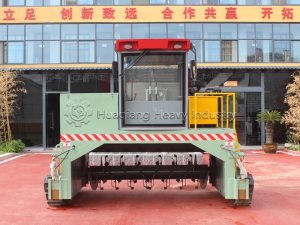
The most crucial function of the compost turner is ventilation and oxygen supply, ensuring smooth aerobic fermentation. Organic fertilizer raw materials such as livestock and poultry manure, crop straw, and kitchen waste require sufficient oxygen to support microbial activity during composting. Traditional manual composting materials are dense and have poor air permeability, easily breeding anaerobic bacteria, leading to sourness, foul odor, and fermentation stagnation. The compost turner mechanically turns, breaks up, and spreads the materials, breaking the closed state of the pile and allowing air to fully penetrate the interior, providing sufficient oxygen for the reproduction and decomposition of aerobic microorganisms, significantly accelerating the degradation rate of organic matter.
Simultaneously, the compost turner can precisely control the temperature and humidity of the pile, optimizing the fermentation environment. Aerobic fermentation continuously releases heat, easily leading to excessively high internal temperatures within the compost pile. High temperatures can cause the loss of nitrogenous nutrients in the fertilizer and kill beneficial bacteria. Regular turning and turning dissipates excess heat and moisture, stabilizing the temperature within the optimal fermentation range of 55-65℃. This effectively kills pathogens, insect eggs, and weed seeds in the raw materials, achieving harmless fertilizer treatment, while also preventing nutrient loss and ensuring more thorough and uniform fermentation.
Furthermore, the equipment also functions to stir, crush, and homogenize materials. During fermentation, materials tend to clump and become unevenly moist. The turning machine breaks up clumps, mixes new and old raw materials, and ensures a uniform distribution of moisture, bacteria, and nutrients, preventing incomplete fermentation in certain areas and improving the uniformity and fertility of the finished organic fertilizer.
Compared to manual turning, organic fertilizer compost turning machines significantly reduce labor and time costs, shorten the fermentation cycle by nearly half, reduce odor diffusion, and achieve environmentally friendly resource utilization of waste, contributing to the sustainable development of ecological agriculture. It is an indispensable core piece of equipment for modern agricultural organic fertilizer production.