

In industries such as feed processing, organic fertilizer production, and biomass pelletizing, there is a wide array of granulation equipment available. Among them, the flat-die pellet machine has emerged as the preferred choice for small-to-medium-sized farms and processing plants, thanks to its strong adaptability, cost-effectiveness, and low failure rate. Compared to equipment like ring-die pellet machines, flat-die models better align with general production needs, making them a highly economical choice for small-scale operations.
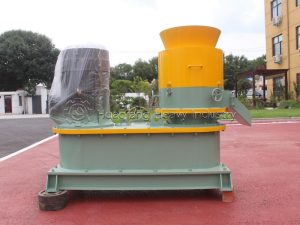
Broad material adaptability is a standout feature of the flat-die pellet machine. It is not picky about raw materials; it can easily process organic waste—such as crop stalks, sawdust, and chicken, cattle, or sheep manure—as well as produce mixed feed pellets from ingredients like corn and soybean meal. This versatility allows a single machine to handle both feed production and organic fertilizer processing. No complex pre-treatment is required; standard crushed materials can be pelletized directly, significantly simplifying the production process and making the machine suitable for various small-scale production line setups.
Ease of operation and low maintenance costs are key reasons for its popularity. The flat-die pellet machine features a simple structure and a high degree of automation, allowing a single person to manage production without the need for specialized technical staff, thereby drastically saving on labor costs. Furthermore, the machine has few wear parts; the dies and pressure rollers are highly durable and resistant to clogging or jamming. Daily cleaning and maintenance are straightforward, and long-term repair costs are far lower than those of other pelletizing equipment, ensuring excellent value over time.
In terms of output, the flat-die pellet machine delivers consistent pellet quality. The resulting pellets are standard cylinders—uniform in shape, highly compact, and low in dust—making them resistant to crumbling or breaking apart. The low-temperature extrusion process preserves the nutritional content of the feed or organic fertilizer; the feed pellets are highly palatable, while the organic fertilizer pellets are convenient to store and apply, with final product quality fully meeting industry standards.
Additionally, the flat-die pellet machine offers low energy consumption, quiet operation, and a compact footprint, making it suitable for installation in both home settings and small workshops. With a low initial investment threshold and quick returns, it enables the resource-efficient utilization of livestock waste and allows for self-production of pellets to reduce procurement costs. Overall, the flat-die pellet mill meets the needs of most small-to-medium-scale operations, making it a practical, cost-effective, and reliable choice for pelletizing equipment.