

The large-wheel compost turner is a primary piece of equipment in organic fertilizer production lines. It utilizes the rotation of its wheels to break up, turn, aerate, and move materials—a process widely applied in the aerobic fermentation of organic matter such as livestock manure, crop straw, and sludge. The machine features a complex, specialized structure consisting of five main modules: the turning wheel assembly, the power transmission system, the mobile frame, the hydraulic lifting mechanism, and an intelligent electrical control system. These components work in synergy to ensure a stable fermentation process.
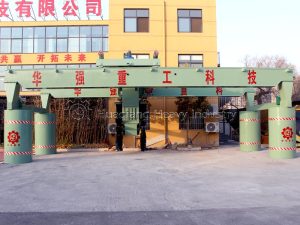
The turning wheel assembly serves as the operational core of the machine and comprises large-diameter discs, wear-resistant turning tines, and support arms. The discs are fabricated from high-strength steel plates, with high-chromium, wear-resistant tines mounted radially along their edges. These tines undergo a quenching process, making them highly impact-resistant and durable. They can penetrate to the very bottom of a material pile, breaking up clumps and tossing the material upward; this maximizes exposure to the air and enhances oxygen supply for fermentation. The turning tines are typically designed to be detachable, allowing for individual replacement when worn, which helps reduce operation and maintenance costs.
The power transmission system provides the energy required for the rotation of the wheels. It includes a main motor, a hardened-gear reducer, a main shaft, and bearing housings. Power from the motor is transmitted through the reducer—which reduces speed while increasing torque—to the main shaft, driving the wheels in a stable, consistent rotation. This transmission system is designed to handle heavy loads and operate smoothly, even in the high-humidity, corrosive environments typical of fermentation facilities, ensuring the equipment can function continuously.
The mobile frame supports the entire machine and facilitates its movement. It consists of a gantry frame that spans the fermentation trench, a carriage assembly, rail-mounted wheels, and drive motors. The frame travels back and forth along rails installed on either side of the fermentation trench. Some models are also equipped with a lateral carriage, which allows for fine-tuning the horizontal position of the turning wheels, ensuring full coverage across the entire width of the trench and leaving no “dead zones” un-turned. The travel system is typically equipped with a variable-frequency drive, allowing the travel speed to be adjusted based on the fermentation status of the material.
The hydraulic lifting mechanism—comprising a hydraulic pump station, cylinders, and piping—is essential for operational adjustment. It controls the elevation of the turning wheel, enabling flexible adjustment of the turning depth. This allows for real-time adjustments—without the need to stop the machine—to accommodate changes in pile height or material moisture levels, while also helping to avoid hard debris and protecting the turning tines and main shaft to meet the specific process requirements of different fermentation stages.
The intelligent electrical control system serves as the equipment’s central command, incorporating a variable-frequency control cabinet, sensors, an operator panel, and protective devices. It provides integrated control over travel, wheel rotation, and hydraulic lifting, while supporting features such as soft-starting, overload protection, and fault alarms.
Leveraging this robust configuration of components, the Huaqiang Heavy Industry large-wheel compost turner offers significant turning depth, high processing capacity, and stable operation, making it an ideal choice for large-scale organic fertilizer fermentation projects. Proper maintenance of core components—including regular inspections of the drive system, hydraulics, and the wear status of the turning tines—can effectively extend the equipment’s service life and ensure the fermentation process remains continuous and efficient.