

This is a primary concern for many livestock farmers and small-scale organic fertilizer producers when purchasing equipment. Compared to trough-type or wheel-type turners, windrow compost turners offer a simple structure, low failure rates, and the use of universal parts. Consequently, their overall long-term operation and maintenance costs are moderate, making them a cost-effective, hassle-free fermentation solution ideally suited for long-term use at small-to-medium-sized sites.
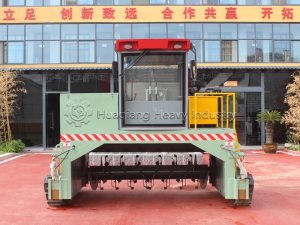
First, the equipment boasts an extremely low overall failure rate, significantly reducing major repair expenses. Windrow compost turners utilize a fully hydraulic drive system—eliminating complex track or chain drive components—resulting in a streamlined, durable design. The main body, drive shaft, and frame are constructed from thickened steel, ensuring stability and wear resistance while preventing deformation or structural failure. An integrated overload protection system automatically halts operation during material jams, effectively safeguarding core components and preventing costly damage caused by rough handling; thus, major overhauls are rarely required.
Second, there are few wear parts, and replacements are universal and inexpensive. Standard wear parts are limited to basics like turning blades, rubber track pads, and lubricants, with no need for expensive, custom-made components. Parts are widely available on the market at transparent prices; a single set of blades lasts 1–2 years, and track components have a lifespan of 3–5 years, resulting in an average annual maintenance cost of just a few thousand yuan. This contrasts favorably with trough-type turners (prone to track wear) and wheel-type turners (requiring frequent blade replacement), offering lower repair frequency and costs.
Furthermore, maintenance requirements are minimal, allowing for self-service to save time and money. Routine upkeep involves simply clearing debris from the machine body, periodically adding lubricant, and checking bolt tightness—tasks easily performed by standard operators without the need for specialized technicians or tools. There is no need to schedule regular on-site manufacturer inspections, thereby avoiding high labor and service call-out fees. With proper basic maintenance, the equipment operates reliably for years with very few unexpected breakdowns.
In summary, windrow compost turners require few major repairs, utilize affordable consumables, and are easy to maintain, resulting in long-term operation and maintenance costs that are far lower than those of traditional fixed fermentation equipment. Although the cost of replacing individual track components is slightly higher than that of standard small parts, the equipment’s long service life and low failure rate make it highly cost-effective when amortized over annual operation and maintenance expenses—an excellent choice for manure fermentation equipment for small-to-medium-sized livestock farms and family farms.