

The core of organic fertilizer production lies in aerobic fermentation and maturation, and the organic fertilizer compost turning machine is a key piece of specialized equipment in this fermentation process. It completely revolutionizes the traditional extensive method of manual composting. Through mechanized turning, crushing, and mixing, it solves many problems associated with slow fermentation, uneven maturation, and inconsistent quality in traditional composting. It is crucial equipment for ensuring efficient and standardized organic fertilizer production, facilitating the resource recycling of agricultural waste.
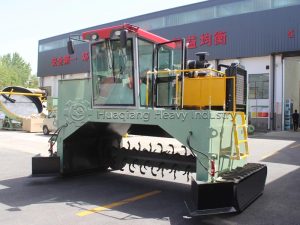
The most critical function of the compost turning machine is ventilation and oxygen supply, ensuring efficient aerobic fermentation. The maturation of compost materials such as livestock manure, crop straw, and garden branches relies on the decomposition by aerobic microorganisms. Traditional compost materials are densely packed, resulting in a lack of internal oxygen, low microbial activity, and a tendency for anaerobic fermentation, leading to unpleasant odors and the growth of unwanted bacteria. The turning machine, through mechanical turning, brings the dense bottom material to the surface, breaks up compacted materials, and allows air to fully penetrate the pile, providing ample oxygen for microorganisms and significantly improving the efficiency of organic matter decomposition.
Precisely controlling the temperature and humidity of the compost pile to achieve uniform decomposition is a crucial function. The optimal temperature for aerobic fermentation is 55-65℃. Turning the compost pile releases high temperatures and moisture, preventing overheating that could kill beneficial bacteria, while also dissipating excess moisture and balancing the material’s moisture content and carbon-to-nitrogen ratio. This process effectively kills pathogens, insect eggs, and weed seeds, preventing root burn and weed growth, ensuring uniform decomposition and significantly improving the quality of organic fertilizer.
Furthermore, the compost turner significantly improves production efficiency and reduces costs. Traditional manual turning is time-consuming, labor-intensive, and uneven, with fermentation cycles lasting two to three months. Mechanized turning is continuous and stable, shortening the fermentation cycle to approximately 30 days, greatly increasing production capacity. Simultaneously, the equipment replaces a large amount of manual labor, reducing manpower input, lowering energy consumption, and meeting the operational needs of large-scale, standardized organic fertilizer production lines.
In summary, compost turners offer multiple benefits, including improved quality, increased efficiency, and environmental protection. They promote the standardization and efficiency of compost production, helping to transform livestock and poultry manure and agricultural waste into valuable resources. They are an indispensable core piece of equipment for the development of green and ecological agriculture.