

The compost turning machine is the core equipment in the aerobic fermentation production of organic fertilizer, directly determining the fermentation effect, production efficiency, and operating costs. Many organic fertilizer production enterprises experience problems such as uneven fermentation, equipment malfunctions, excessive energy consumption, and insufficient site adaptability due to improper selection. Therefore, scientifically selecting the right machine based on actual production needs is crucial to ensuring the stable and efficient operation of the organic fertilizer production line.
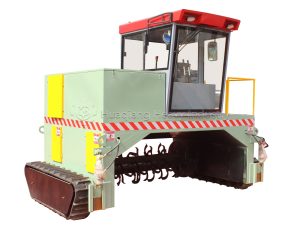
Site conditions are the primary basis for selection. Currently, mainstream compost turning machines are divided into two main categories: trough-type and windrow type, adapting to different production scenarios. Trough-type compost turning machines are suitable for standardized fermentation workshops, requiring fixed fermentation troughs. They offer stable operation, a high degree of automation, and are suitable for large-scale, standardized plant production. Windrow compost turning machines do not require fixed troughs and can operate flexibly in open-air areas, suitable for irregular sites, temporary plants, or small-scale open-air fermentation production lines, offering greater mobility.
Material characteristics are a core selection criterion. Different raw materials have vastly different moisture content, density, and fiber structure, resulting in different equipment requirements. For high-moisture, easily viscous materials such as chicken manure and kitchen waste, turning and composting equipment with anti-tangling and self-cleaning structures should be selected to prevent material sticking and jamming. For fibrous, loose materials such as straw and garden waste, models with high torque and powerful turning and composting blades should be prioritized to ensure thorough material mixing. For conventional materials such as cow manure, general-purpose equipment can be used, balancing cost-effectiveness and operational efficiency.
Production capacity determines equipment specifications. Small-scale farms and start-up organic fertilizer production lines with a daily processing capacity of less than 5 tons can use small, simple turning and composting machines to reduce equipment investment. Medium-sized production lines with a daily processing capacity of 5–20 tons are suitable for medium-sized trough-type or crawler-type equipment, balancing efficiency and energy consumption. Large-scale production bases require fully automatic large wheel compost turning machines that support continuous operation, significantly improving fermentation efficiency and shortening the production cycle.
Finally, operation and maintenance costs must be considered. When selecting a model, priority should be given to models with simple structures, easy maintenance, and universal parts to reduce later operation and maintenance costs. At the same time, in line with automation needs, those with sufficient budgets and a pursuit of intelligent production can choose intelligent models with temperature control and automatic speed adjustment. Small and medium-sized enterprises should give priority to high-performance and practical models to achieve the production goals of improving quality and efficiency and reducing costs and consumption.