

Windrow Compost Turning Machine
The windrow compost turner is designed for organic fertilizer composting; it offers flexible maneuverability and ensures uniform turning, making it suitable for the decomposition of various types of manure and waste.
Model: WF-FD 2300/WF-FD 2600/WF-FD 2800
Power R4102 turbocharged75 diesel engine
Power R4108 turbocharged116 diesel
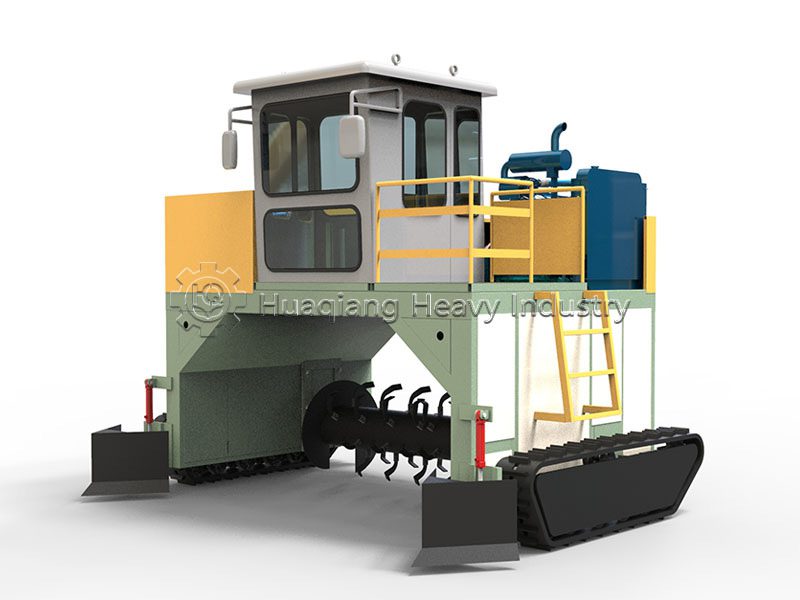
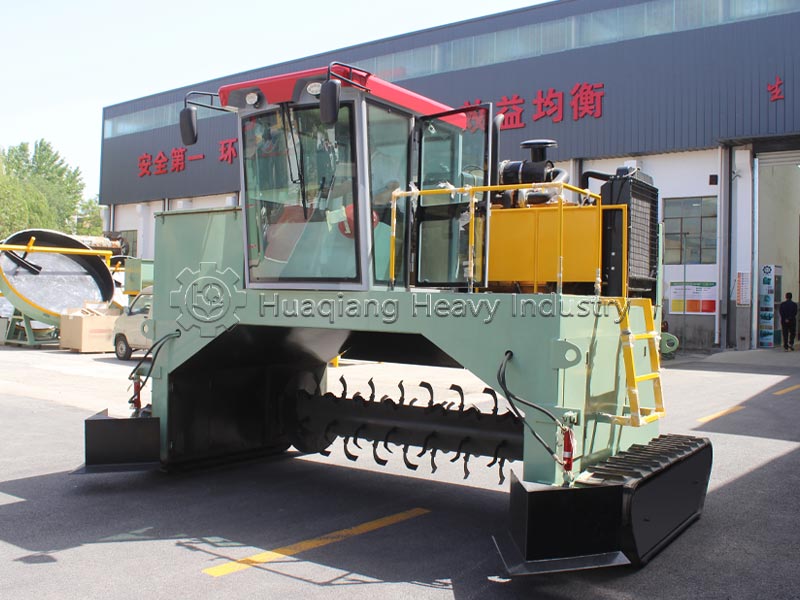
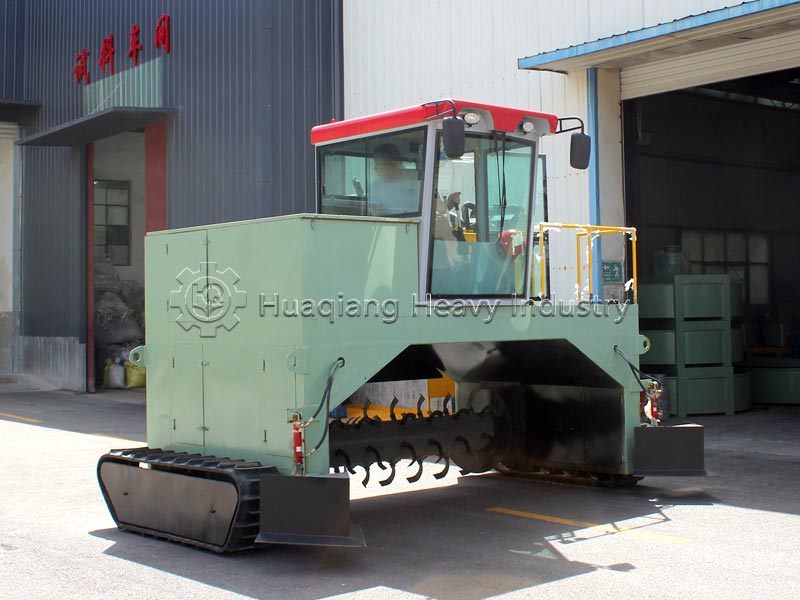
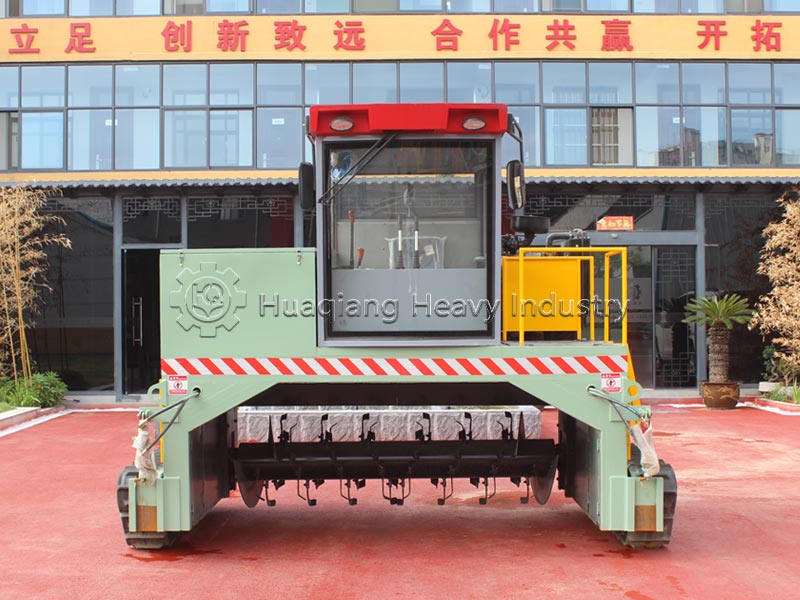
DETAILS
The windrow compost turning machine—often referred to simply as a crawler type compost turner—is specialized fermentation equipment used in organic fertilizer production lines. It is primarily designed for the aerobic fermentation and turning of organic waste materials such as livestock manure, crop straw, sludge, and spent mushroom substrate. By mechanically turning the material to ensure full contact with air, it stimulates aerobic microbial activity and accelerates the decomposition and maturation of organic matter.
How does a windrow compost turning machine work?
The operational process of a windrow compost turning machine can be summarized by four key actions: turning, mixing, aerating, and moving.
During operation, the operator starts the engine, adjusts the turning drum to the appropriate height (usually just above ground level) via the hydraulic system, and engages the drum’s rotation. As the machine moves forward along the material windrow, the rotating drum scoops up, breaks apart, and casts the material backward. Through this process, wet material from the bottom is turned to the surface, while dry material from the surface is moved to the bottom, ensuring thorough mixing. Simultaneously, the material is re-oxygenated, trapped heat is released from the pile, and the activity of aerobic microorganisms is stimulated.
The entire turning process achieves material mixing, ventilation, aeration, and turning—encompassing all the core actions essential for aerobic composting and fermentation.
Notably, the crawler type compost turner leaves behind a neatly formed new windrow, eliminating the need for manual shaping of the pile. Furthermore, the turning drum features a crushing function capable of effectively breaking up clumps formed during fermentation, thereby saving on the cost of additional crushing equipment.
Application Scenarios and Suitable Materials for Windrow Compost Turning Machines
Typical Application Scenarios
Windrow compost turning machines are primarily used in the following scenarios:
Livestock and poultry farm waste treatment areas: Safe treatment and composting/fermentation of animal manure (chicken, cattle, pig, sheep, etc.).
Organic fertilizer production plants: Large-scale fermentation and turning of various organic wastes.
Agricultural parks: On-site treatment of agricultural waste such as crop stalks and spent mushroom substrate.
Solid waste treatment centers: Resource recovery from organic wastes such as sludge, distillers’ grains, and sugar mill filter mud.
Suitable Materials
Crawler-type compost turners are highly adaptable to raw materials and are particularly effective at handling materials with high moisture content or sticky consistencies. Common suitable materials include:
Livestock and poultry manure (chicken, cattle, pig, sheep, etc.), crop stalks, distillers’ grains, sugar mill filter mud, traditional Chinese medicine residues, spent mushroom substrate, sludge, kitchen waste, and other organic wastes.
Notably, even when raw materials have high moisture content or are sticky, the crawler-type compost turner can process them effectively thanks to its crushing capabilities.
Comparison of Crawler-type Compost Turning Machines with Trough and Wheel-Type Compost Turning Machines
For users currently selecting equipment, understanding the differences between various types of compost turners is crucial.
Compared to trough compost turning machines
Crawler-type compost turning machines do not require the construction of fermentation channels or rails. Trough compost turners rely on concrete fermentation channels and rails to operate; they offer deep turning capabilities and precise material displacement, making them suitable for fixed sites with organized layouts where high turning efficiency is prioritized. In contrast, crawler-type compost turners can move freely across open ground, offering flexibility for sites without fixed infrastructure. Regarding investment costs, crawler-type compost turners eliminate initial site construction expenses and generally have a lower equipment purchase price.
Compared to wheel-type compost turners
The core advantage of the crawler type compost turning machine is its mobility and terrain adaptability. Wheel-type compost turners rely on tires and are suited for dry, hard ground, but they are prone to slipping or getting stuck in high-moisture, muddy conditions. Crawler-type compost turners, however, feature a large ground contact area and superior traction, allowing them to easily navigate muddy, soft, or uneven terrain.
Compared to chain-plate compost turners
Crawler-type compost turners do not require fermentation channels; they offer greater mobility and can move flexibly between multiple fermentation sites.
PARAMETERS
|