

The compost turning machine is the core equipment in organic fertilizer fermentation production. By turning, aerating, and crushing materials, it accelerates the composting process, removes odors, and directly determines the quality and production efficiency of organic fertilizer. The market offers a wide variety of turning machines with varying performance. To select the right machine for your production line, you need to consider your actual production needs to avoid blindly purchasing and wasting resources.
Matching the characteristics of the materials is the primary prerequisite for selection. Different fermentation raw materials have vastly different textures and moisture content, requiring different machine models. For processing high-moisture, sticky materials such as livestock manure and sludge, choose a chain-plate or windrow compost turning machine with anti-stick design and smooth discharge to prevent material adhesion and accumulation. For high-fiber, loose materials such as straw and sawdust, prioritize models with crushing functions to effectively break up clumps, reduce fiber entanglement, and ensure sufficient aeration and fermentation. For mixed material production, choose a general-purpose model with adjustable parameters and wide adaptability.
Match the equipment’s capacity to your production scale, balancing efficiency and cost. Small-scale farms and family workshops with limited daily material processing capacity are well-suited to wheeled or small windrow compost turners. These machines offer low investment, flexible operation, and can meet intermittent production needs. For medium-sized organic fertilizer processing plants with moderate daily processing volumes, trough-type compost turners are the optimal choice, providing uniform turning depth, stable operation, and suitability for continuous fermentation. Large-scale production bases require large wheel compost turners, which can be integrated into production lines, significantly improving production efficiency. It is recommended to reserve approximately 20% capacity margin when purchasing to avoid accelerated wear and tear from prolonged full-load operation.
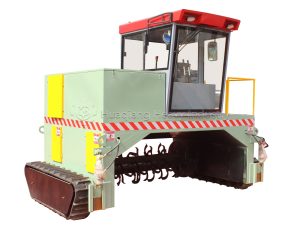
The type of equipment should be determined based on site conditions. For open-air composting sites, tracked self-propelled compost turners are preferred, as they are not limited by fixed tracks and offer flexible operating range. For standardized plants and fixed fermentation tank sites, trough-type compost turners are suitable, offering regular floor space, precise operation, and suitability for standardized production. Large equipment should not be selected for narrow and restricted sites to avoid insufficient space affecting operations.
Finally, equipment quality and maintenance costs must be considered. Prioritize models with hydraulic lifting, intelligent temperature control, and sensor monitoring to achieve automated turning and precise control of fermentation temperature and oxygen content. Also consider equipment energy consumption, wear-resistant materials, and after-sales support. Low-energy, easy-to-maintain equipment can effectively reduce long-term production costs and facilitate efficient and standardized organic fertilizer production.