

In the organic fertilizer processing and livestock waste resource utilization sectors, the flat-die pellet machine is the mainstream granulation equipment for small- and medium-sized operations, favored for its cost-effectiveness and versatility. However, as with any equipment, there are specific use cases and limitations. This article outlines the core advantages and disadvantages of flat-die pellet machines to help users make informed choices and avoid common production pitfalls.
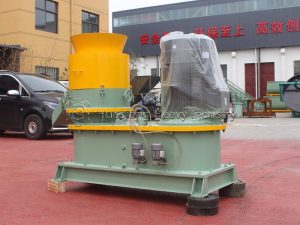
The core advantages of flat-die pellet machines are significant. First, they offer broad raw material compatibility, capable of processing various fermented materials such as chicken manure, cattle manure, crop straw, and mushroom residue. Materials with a moisture content of 20%–40% can be granulated directly without intensive drying, substantially reducing auxiliary production costs. Second, the equipment requires low initial investment and minimal floor space; its compact structure and simple installation eliminate the need for large, specialized factory buildings, allowing for standalone production—making it ideal for small farms and family-run workshops. Furthermore, the equipment is easy to operate and maintain (requiring only 1–2 personnel), boasts a low failure rate, and offers controllable energy consumption. It requires no binders, thereby maximizing the organic matter content of the fertilizer; the resulting granules are dense and durable, facilitating easy storage and transport.
At the same time, flat-die pellet machines have distinct drawbacks. First, production capacity is limited; a single unit produces only 0.3–3 tons per hour, failing to meet the demands of large-scale, continuous production in major organic fertilizer plants. Second, wear parts—specifically the flat die and pressure rollers—deteriorate quickly due to prolonged friction with the material, necessitating regular replacement and incurring ongoing maintenance costs. Additionally, the equipment has strict requirements for raw material pre-treatment; materials that are clumped or excessively long must be crushed and screened beforehand to prevent die clogging or machine jams. Finally, the finished cylindrical granules lack high sphericity and visual appeal compared to those produced by rotary drum granulators; furthermore, processing stability is poor with high-moisture materials, making 24-hour continuous operation unfeasible.
In summary, flat-die pellet machines offer excellent cost-performance ratios and ease of use, making them well-suited for small- to medium-scale organic fertilizer production. Conversely, large-scale production lines are better served by high-end granulation equipment; selecting the right machinery based on specific needs is key to maximizing production efficiency.