

The disc granulator is a common piece of granulation equipment used in industries such as organic fertilizer production, chemicals, and building materials; it is widely utilized due to its excellent forming results and operational flexibility. To ensure stable operation, improve the quality of the finished granules, and extend the equipment’s service life, operators must strictly adhere to standardized usage requirements, ensuring proper operation, precise control, and scientific maintenance.
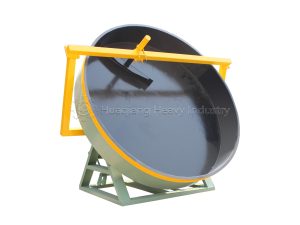
Pre-start inspections are fundamental to the equipment’s proper functioning. Operators must clear debris and material buildup from inside the disc and inspect the wear on liner plates and scrapers, replacing them promptly if wear exceeds limits. Simultaneously, the lubrication status of components such as drive bearings and pulleys must be checked; grease should be applied according to standards, filling one-half to two-thirds of the bearing cavity. Bolts across all sections must be tightened, and water spray lines checked for obstructions; starting the equipment with existing faults or with material already in the disc is strictly prohibited. Furthermore, raw materials require pre-processing—screening out impurities and adjusting moisture content to the optimal range of 25% to 30%—to ensure the material is uniform and fine.
Parameter control and standardized operation during the process are crucial for granulation quality. The disc granulator machine must be started in the correct sequence: first, start the disc motor, and once the rotational speed stabilizes, activate the water spray and feeding systems. The disc’s tilt angle should be adjusted based on material characteristics—typically between 35° and 55°—and matched with an appropriate rotational speed to avoid issues such as granules becoming too small (due to excessive speed) or material accumulation (due to insufficient speed). Feeding must be uniform and steady, with moisture levels dynamically fine-tuned via the spray system to prevent material clumping or loose formation; operators should monitor granule conditions in real-time and adjust parameters promptly to ensure consistent, stable granulation.
Equipment maintenance and safe operation are essential. After production, the shutdown procedure must be followed: stop feeding first, allow the disc to empty of material, and then sequentially shut down the water spray system and the main motor. Residual material must be thoroughly cleaned from the equipment after each use to prevent buildup and hardening, which could affect subsequent production runs. Routine maintenance involves regularly checking wear parts, conducting comprehensive monthly inspections of components, and tightening connecting bolts on a weekly basis. At the same time, operators must be properly certified and maintain safety precautions throughout the process; touching moving parts while the equipment is running is strictly prohibited. The work area must be kept tidy and equipped with safety safeguards to mitigate operational hazards.
Adhering to the operational requirements for the disc granulator ensures a high pass rate for the finished granules, reduces the likelihood of equipment failure, and lowers production costs—serving as a crucial guarantee for efficient and safe production.