

In industries such as organic fertilizer, animal feed, and biomass fuel pellet processing, flat-die pellet machines have become the preferred choice for small-to-medium enterprises and individual workshops due to their numerous practical advantages. By overcoming the drawbacks of traditional pelletizing equipment—such as complex structures, high energy consumption, and poor material adaptability—these mills facilitate lightweight, efficient production through their cost-effectiveness, practicality, and low maintenance costs.
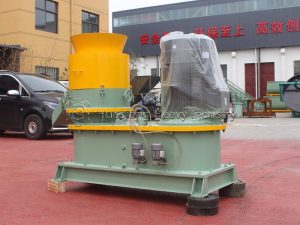
Low cost and a low barrier to entry are the most prominent advantages of flat-die pellet machines. Featuring a simple, compact structure with core components limited to the die and pressure rollers, the equipment eliminates complex transmission systems; its purchase price is far lower than that of ring-die pellet mills with equivalent capacity—often just one-third of the cost. Additionally, the machine has a small footprint, saving 40% to 60% of floor space compared to similar equipment. It can be installed and put into operation without major workshop modifications, significantly reducing facility investment costs, making it ideal for entrepreneurs and small processing plants just starting out.
They offer exceptional material adaptability and high production flexibility. Flat-die pellet machines are compatible with a wide range of raw materials, processing everything from high-fiber biomass (such as straw, sawdust, and forage) to livestock manure, composted organic fertilizer, and feed ingredients. They have lenient requirements regarding particle size and moisture content, accommodating wet materials with 20%–40% moisture without the need for extensive pre-drying. Equipped with a central screw-based pressure adjustment mechanism, the die gap can be flexibly adjusted to meet the specific pelletizing needs of different materials, allowing a single machine to serve multiple purposes and production scenarios.
They are energy-efficient and produce high-quality pellets. During operation, there is no misalignment friction between the pressure rollers and the die plate, resulting in low operational resistance and energy consumption—specifically, 15%–20% lower energy use per unit of output compared to traditional equipment. Relying on purely mechanical extrusion, the process requires no binders; the resulting pellets are dense, hard, and structurally compact, resisting crumbling or breakage while maintaining a uniform, regular appearance, which effectively enhances market competitiveness.
Furthermore, flat-die pellet machines are easy to maintain and have a long service life. Key wear-resistant components are highly durable, and the pressure rollers can be refurbished and reused multiple times, significantly reducing the cost of replacement parts. This pellet processing equipment offers convenient assembly and disassembly, simple troubleshooting, minimal downtime for maintenance, and high operational availability, ensuring stable, continuous production—making it a highly cost-effective solution.