

Many professionals in the fertilizer industry focus primarily on price when purchasing a granulator, often overlooking material compatibility. This frequently leads to issues such as low granulation rates, frequent clogging, and high energy consumption. The key to selecting a granulator is not necessarily choosing the most expensive model, but rather finding a solution tailored to your specific raw material characteristics, production capacity targets, and requirements for the final product. Drawing on years of experience in supplying fertilizer equipment, Huaqiang Heavy Industry offers the following practical guide for selection.
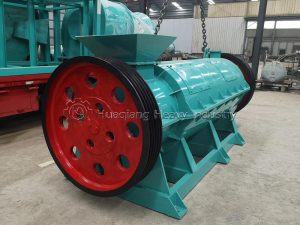
First, consider your raw materials—this is the primary criterion. Disc granulators utilize a wet granulation process; they are well-suited for cohesive powdered materials like chicken manure, cattle manure, or humic acid. By relying on a rolling, agglomeration-based mechanism, they produce smooth, aesthetically pleasing, spherical granules. Particle size can be easily controlled by adjusting the disc’s inclination angle and rotational speed, making this an ideal choice for small-to-medium-scale organic fertilizer production lines where the appearance of the granules is a priority. Stirring-tooth (agitation-tooth) granulators form granules through the kneading and interlocking of materials. They require no additional binders, offer excellent adaptability to wet materials, ensure stable granulation, and are well-suited for large-scale, continuous organic fertilizer production. Flat-die pellet machines are designed for dry powdered materials. They operate at ambient temperatures to produce high-hardness granules with minimal “fines” (recycled material). These are perfect for applications requiring the granulation of dry materials—such as sodium sulfate or certain bio-organic fertilizers—and offer the added benefit of lower drying costs.
Next, evaluate your production capacity and site conditions. Determine your required hourly output to select the appropriate model; this prevents inefficiencies such as “over-specifying” equipment (which leads to high power consumption) or “under-specifying” it (which causes overloading and premature damage). Additionally, ensure there is sufficient space for auxiliary equipment, such as compost turners, screening machines, or dryers. Small-scale workshops or pilot projects might opt for a smaller disc granulator, while established organic fertilizer plants aiming for high, consistent output should prioritize stirring-tooth granulators. For those working with dry powder formulations who wish to avoid wet-processing methods, a flat-die pellet machine is the most suitable choice.
Finally, pay close attention to the equipment’s build quality and its wear parts. Components such as stirring teeth, die plates, and compression dies are subject to frequent wear; the wear resistance of the materials used for these parts directly determines the equipment’s overall service life. Prioritize models with thickened, reinforced structures and gears that have undergone quenching; these offer smoother operation and longer maintenance intervals. Also, verify the manufacturer’s support services—a reliable supplier will provide on-site planning, installation, commissioning, and staff training, as well as rapid response to any technical issues, ensuring the production line gets up and running reliably.
Finally, consider both initial costs and long-term returns. Low-priced equipment often leads to frequent replacement of wear parts and excessive downtime, resulting in a higher total cost of ownership. Choose based on your specific product formula and market positioning: opt for a disc granulator if the visual quality of the granules is a priority (ideal for premium organic fertilizers); select a stirring-tooth granulator for large-scale organic fertilizer production; or choose a flat-die pellet machine for dry-powder granulation and energy-efficient production. Identifying the right equipment is the key to consistently producing high-quality granules, minimizing production losses, and maximizing overall profitability.