

In industries such as organic fertilizer production, solid waste treatment, and feed processing, crushers serve as core equipment for raw material pre-processing. Many clients often confuse half-wet material crushers with standard crushers; selecting the wrong equipment frequently leads to issues like clogging, unplanned downtime, and reduced output. While they may appear similar in external appearance, they differ fundamentally in terms of structural design, suitable materials, and operational applications.
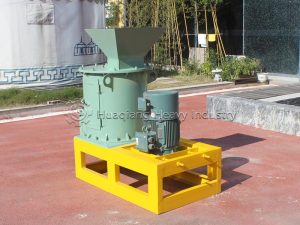
The primary distinction lies in their internal structure. Most standard crushers feature a bottom screen, which controls the fineness of the output—material can only exit once it passes through the screen apertures. This design is suitable for dry, loose, and non-sticky materials. However, when processing materials with high moisture content, the wet material tends to clog the screen apertures, causing the machine to jam—in severe cases, this can even burn out the motor. In contrast, semi-wet material crushers utilize a screenless design. They rely on a rotor equipped with hammers to break down materials through impact and shearing. Once the material reaches the desired particle size, it is discharged directly. This fundamentally eliminates the problem of clogging caused by wet materials. Some models even feature reversible rotors, which enhance crushing efficiency and ensure more uniform wear on the hammers.
Furthermore, they differ in the range of moisture content they can handle. Standard crushers are generally designed for materials with a moisture content of less than 15%, making them ideal for dry, brittle substances such as corn, dried straw, ores, or dried medicinal herbs. Semi-wet material crushers, however, are specifically engineered for high-moisture organic materials; they can reliably process feedstocks with a moisture content ranging from 25% to 55%. Materials with high stickiness and moisture—such as fermented livestock manure, sludge, fungal residue, pharmaceutical waste, or biogas residue—can be fed directly into the machine without the need for prior sun-drying. This eliminates the need for drying space and reduces drying costs, making these crushers highly suitable for the pre-processing stage of organic fertilizer production lines.
Additionally, there are differences in the final output and the specific scenarios for which each is suited. Standard crushers utilize interchangeable screens with varying aperture sizes to produce materials ranging from coarsely crushed particles to ultra-fine powders. They are widely used in the processing of animal feed, grains, chemical products, and traditional Chinese medicinal herbs; due to the significant amount of dust generated, they are typically equipped with dust collection systems. In contrast, crushers designed for semi-wet materials produce uniform, loose particles that are resistant to clumping. The output meets the feed requirements for downstream processes such as disc granulation or roller-press granulation, making these machines ideal for handling organic fertilizers, compost, landscape waste, and fermented food waste residues. However, they are not suitable for producing ultra-fine dry powders, and their method for adjusting particle fineness differs from that of standard crushers.
Regarding operation and maintenance costs, the screens in standard crushers are wear-prone components that degrade rapidly when processing wet materials.Half-wet material crushers, however, do not rely on screens; instead, they feature thickened alloy hammerheads that can be rotated to utilize multiple sides. This design results in less frequent maintenance and greater stability during continuous production, even when processing wet or sticky materials over long periods.
In summary: For processing dry materials or producing ultra-fine powders, a standard crusher is the preferred choice. For handling high-moisture, sticky organic raw materials—particularly within an organic fertilizer granulation production line—a half-wet material crusher is the appropriate solution. Selecting the right equipment is essential to ensuring the stable and efficient operation of the entire production line.