

The disc granulator is the core wet granulation equipment for the production of organic fertilizers and compound fertilizers. It is widely used in the granulation production of powder materials due to its advantages of good molding effect, simple operation and high cost performance. Many users’ equipment has poor granulation effect and fails to form balls. The core reason is improper material selection. This article explains in detail the various raw materials suitable for disc granulators to help you accurately match the equipment and improve the balling rate.
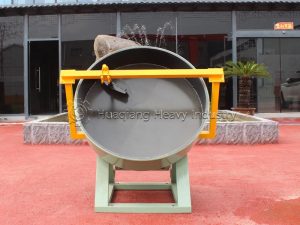
The first is various types of livestock and poultry manure raw materials, which are the most commonly used materials for disc granulators. The decomposed and fermented chicken manure, pig manure, sheep manure, cow manure, etc. have a loose texture, moderate humidity, and a certain degree of organic matter viscosity. There is no need to add a large amount of binder. It can be naturally formed into balls by spraying water and rolling. The granulation is uniform and the particle hardness is moderate. It is the preferred granulation raw material for small organic fertilizer plants.
Followed by various mineral and chemical powder raw materials. Powdered chemical fertilizer raw materials commonly used in compound fertilizer production, such as urea, phosphate fertilizer, potash fertilizer, and ammonium sulfate, have fine particles and good fluidity, and are suitable for the disc wet granulation process. With reasonable proportions and spray humidification, it can be quickly rolled into rounded particles. The finished fertilizer has good water solubility and stable fertilizer efficiency, fully meeting the needs of industrial compound fertilizer production.
Crushed materials such as straw and plant ash are also suitable for disc granulators. Crushed powders such as crop straw, rice husk, sawdust, etc., as well as farmland plant ash, are light and porous in texture. When combined with an appropriate amount of manure and mud to adjust the humidity and viscosity, they can be granulated smoothly, realizing the resource utilization of agricultural and forestry waste and making ecological organic fertilizer.
It should be noted that the disc granulator is not suitable for high viscosity, high hardness, bulk materials. Uncrushed hard blocks, mud with extremely high moisture content, and pure viscous colloidal materials are easy to stick to the disc and agglomerate, and cannot be formed normally. Generally speaking, powder materials that are dry and fine, have adjustable humidity, and have slight viscosity are suitable for disc granulators. Choosing the right materials can greatly improve production efficiency and finished product quality.