

While there is a wide variety of granulation equipment available in the compound and chemical fertilizer processing industries, the disc granulator remains the mainstream choice for fertilizer plants of all sizes. Compared to rotary drum or extrusion granulation systems, the disc granulator stands out as core equipment—and a widely recognized, practical solution—thanks to its mature technology, superior product quality, and excellent cost-effectiveness.
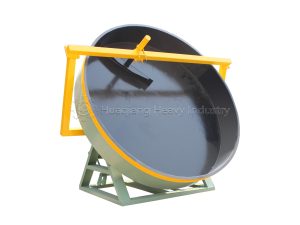
Superior granule quality is the primary reason for its popularity. Fertilizer production demands high standards for granule uniformity and sphericity, as these factors directly influence the product’s appearance, solubility, and application performance. Disc granulators utilize a wet rolling granulation process; materials tumble, adhere, and form within the disc, resulting in granules that are round, uniform in size, and possess optimal hardness—making them resistant to breakage and caking. Furthermore, the finished fertilizer offers excellent water solubility and stable nutrient release, perfectly meeting commercial quality standards and significantly boosting market competitiveness.
The equipment is highly adaptable, accommodating a wide range of raw materials. Whether processing single-nutrient powders (such as urea, phosphate, or potash) or complex blends of multiple ingredients, the disc granulator handles the task effectively. Operators can flexibly adjust the disc’s tilt angle, rotation speed, and water spray volume to suit various formulas and moisture levels. Setup and adjustment are straightforward, allowing plants to quickly switch between product types and respond flexibly to changing market demands.
It offers high cost-effectiveness and simple maintenance, making it ideal for large-scale production. With a simple structure and low failure rate, the initial investment and auxiliary system costs are far lower than those of large-scale granulation alternatives. The equipment operates with low energy consumption and requires only routine cleaning and maintenance; with few wear parts, it significantly reduces production and operational costs. Additionally, the equipment is available in a full range of sizes with controllable output, making it suitable for everything from the startup needs of small plants to the large-scale, continuous production lines of major facilities.
In summary, the core advantages of consistent quality, broad adaptability, low cost, and ease of operation have made the disc granulator machine a perennial mainstream granulation device in the fertilizer industry, as well as the preferred choice for countless fertilizer plants over the long term.