

The disc granulation production line serves as the core equipment in the granulation stage for organic and compound fertilizers. Proper maintenance not only ensures consistent granule quality and reduces issues like material clogging or sticking to the disc, but also extends the equipment’s service life and lowers downtime-related repair costs. Huaqiang Heavy Industry recommends that clients implement a structured maintenance system—covering shift-based, weekly, monthly, and quarterly inspections—to ensure that maintenance tasks are carried out systematically for each component.
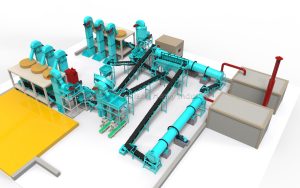
After each production shift, the primary task is cleaning. Any residual wet material on the disc surface, scrapers, spray piping, or discharge outlet must be thoroughly removed; if left to adhere for long periods, damp fertilizer can harden, stick to the disc, and corrode the lining plates. Pay close attention to the gap between the scraper and the disc surface, which should be maintained at 1–2 mm. If the gap is too large, material will accumulate; therefore, scrapers should be adjusted or replaced promptly as they wear down. During operation, monitor the equipment for unusual noises or vibrations—if any anomalies occur, stop the machine immediately for inspection. Never continue operation while the equipment is faulty. Additionally, check the spray nozzles for clogs to ensure a uniform and stable water supply for the granulation process.
Weekly maintenance focuses on fasteners and transmission components. Due to the continuous vibration of the production line, bolts may loosen; all connecting hardware—including those on the disc support, motor base, and scraper mount—should be tightened. Inspect drive belts for proper tension and signs of wear, replacing them if they show cracks or missing teeth. Simultaneously, check the wear status of the disc lining plates; uneven wear can directly lead to inconsistent granule sizing. Clean dust from the surfaces of the motor and gearbox to prevent overheating caused by poor heat dissipation.
Monthly maintenance centers on lubrication, which is essential for the stable operation of bearings and gearboxes. Apply high-temperature grease to the main shaft bearing housings, filling only 1/3 to 1/2 of the bearing cavity—overfilling can lead to excessive heat generation. Regularly check the oil level and quality in the gearbox. Ensure the gearbox is filled with the appropriate gear oil upon initial use and follow a scheduled oil-change regimen; replace the oil immediately if it becomes cloudy or contaminated with impurities. Additionally, the inclination angle of the granulation disc must be calibrated; any deviation in this angle will alter the rolling trajectory of the material, thereby affecting the pelletizing rate.
Conduct a comprehensive quarterly overhaul to inspect the entire machine. Remove protective covers to check for gear wear, test motor insulation, clear dust from electrical circuits, and identify potential issues such as aging wiring or loose connections. Remove rust from the frame and support structures, applying anti-corrosion paint where necessary. Verify the operational synchronization of auxiliary equipment—such as feeding and screening systems—to ensure the entire production line functions reliably as an integrated unit.
Routine production management is also an essential aspect of maintenance. Remove iron and other impurities from raw materials beforehand; stones or metal fragments entering the disc can scratch both the disc surface and the scraper blades. Strictly control the moisture content of raw materials—excessive moisture frequently causes material to stick to the disc, significantly increasing the burden of cleaning. Maintain detailed maintenance logs—recording lubrication, parts replacements, and fault information—to help anticipate when components will need to be replaced. Proper, systematic maintenance is the key to ensuring that a disc granulation production line consistently produces uniform, well-rounded fertilizer granules, keeping the operation running efficiently over the long term.