

NPK compound fertilizer, due to its balanced nutrients and convenient application, has become the mainstream choice for modern agricultural fertilization. The granulator, as the core equipment in its production, directly determines the quality, efficiency, and applicable scenarios of the fertilizer granules. Currently, the market offers a wide variety of NPK fertilizer granulators, which can be mainly divided into three categories based on granulation principles, process characteristics, and production scale, catering to the production needs of different enterprises.
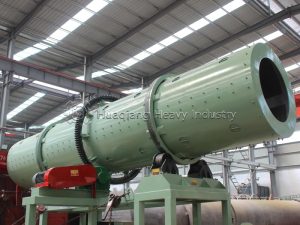
The rotary drum granulator is the most widely used wet granulation equipment in NPK fertilizer production and is the first choice for small and medium-sized enterprises. Its core mechanism utilizes the rotation of an inclined cylindrical drum, employing the combined effects of centrifugal force, friction, and gravity to mix NPK raw materials with appropriate amounts of water and binder, causing them to roll and agglomerate into granules. It allows for continuous feeding and discharging, high granulation efficiency, strong adaptability to raw materials, and the ability to process various mixed formulations. It also features balanced energy consumption per unit product, making it suitable for large-scale continuous production. Its drawback is slightly lower granule uniformity, requiring the use of screening equipment.
Disc granulators are traditional small-scale granulation equipment with simple structure, low investment cost, and a footprint only 1/3 to 1/2 that of drum granulators with the same processing capacity. They use the rotation of an inclined disc to roll raw materials into granules under centrifugal force and friction, with the help of a small amount of moisture or binder. The granulation rate can reach over 90%, producing round granules. The particle size can be flexibly adjusted, making it suitable for small-batch, multi-specification production. It is suitable for small workshops, family farms, and other scenarios with limited space. The disadvantage is its lower production efficiency, making it suitable for low-concentration NPK fertilizer production.
Extrusion granulators are dry granulation equipment that requires no added water or subsequent drying process, resulting in lower energy consumption. Their principle is to extrude NPK dry powder raw materials into flakes under high pressure, then crush and screen to obtain granules. The granules have high strength and require no binder, meeting the needs of green agriculture. This type of machine has stricter requirements for raw material particle size and moisture content, making it suitable for small to medium-sized production lines, especially for granulating non-sticky raw materials such as urea and potassium chloride. It is widely used in the fine production of NPK compound fertilizers.
Different types of NPK fertilizer granulators have their own advantages and disadvantages. Enterprises need to make reasonable selections based on their own production scale, raw material characteristics, product specifications and site conditions in order to achieve the goals of improving quality and efficiency, reducing production costs and promoting the high-quality development of the NPK compound fertilizer industry.