

Answer: Granule size in a disc granulator can be precisely controlled by adjusting four key parameters: disc inclination angle, rotational speed, water spray volume, and feed rate. This process is simple to manage and suitable for granulating various powdery materials, such as organic and compound fertilizers; mastering these adjustments is essential for daily equipment operation.
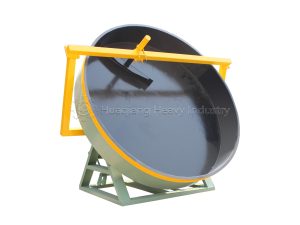
First, adjust the disc inclination angle, which is the primary factor in controlling granule size. A steeper angle results in a shorter material residence time, producing smaller, finer granules; a shallower angle allows for longer tumbling and accumulation times, enabling granules to agglomerate fully and grow larger. Standard equipment typically offers an adjustable angle range of 45° to 60°; decrease the angle for larger fertilizer granules and increase it for smaller ones.
Second, adjust the rotational speed. Higher speeds generate stronger centrifugal force and more frequent tumbling, resulting in smaller granules; lower speeds provide ample time for agglomeration, leading to a uniform increase in granule size. Adjustments should be made gradually and steadily to avoid sudden speed changes that could cause inconsistent granule sizes.
Simultaneously, the water spray volume and feed rate can be adjusted. Higher moisture content and uniform spraying improve powder agglomeration, yielding larger, rounder granules; insufficient moisture often leads to excessive fine powder and undersized granules. A stable feed rate is crucial; feeding too quickly prevents proper granule formation, resulting in small, irregular particles, whereas a steady feed rate ensures uniform granule specifications.
Daily adjustments should be made incrementally—fine-tuning one parameter at a time and observing the granule characteristics after the equipment stabilizes—to meet production requirements and effectively improve granule uniformity and the product pass rate.