

A disc granulation production line is a common, comprehensive equipment setup for small and medium-sized organic fertilizer processing plants. It features a streamlined process and a high granulation rate. Using decomposed organic materials—such as livestock and poultry manure, crop straw, or fungal residue—as raw stock, the system transforms these inputs into uniform, rounded organic fertilizer granules through a series of stages: pre-treatment, proportioning and mixing, disc granulation, drying and cooling, and finally, screening and packaging. Huaqiang Heavy Industry’s complete production line offers a high degree of automation and stable operation, earning it strong recognition among fertilizer manufacturers.
The first step is raw material pre-treatment. Materials must undergo turning and fermentation until fully decomposed to prevent “burning” the crops (phytotoxicity) upon application. Once decomposed, the material is fed into a crusher to remove stones and debris, ensuring a consistent, fine, and loose texture—an essential foundation for the subsequent granulation process. Next, the material enters an automatic proportioning system, where ingredients such as humic acid, microbial inoculants, and minor conditioning agents are added according to a specific formula. The mixture is then thoroughly blended in a twin-shaft paddle mixer, with the moisture content adjusted to 20%–25%. Moisture control is critical for disc granulation: if the material is too dry, it will not form granules; if it is too wet, it will stick to the disc and clump together.
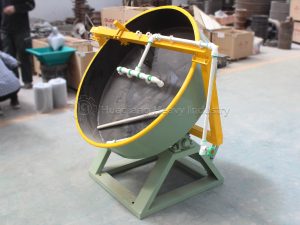
The blended material is continuously fed into the tilted, rotating pan of the disc granulator. As the pan rotates at a constant speed and at an optimal incline, the material rolls and tumbles due to friction and centrifugal force. A spray system adds a small amount of moisture, allowing the fine particles to act as “nuclei” that accumulate layers of material, gradually growing into spherical granules. Once the granules reach the desired size of 2–5 mm, they automatically spill over the edge of the disc. The granulation rate can exceed 93%. Any fine, ungranulated material is recycled back into the granulator, maximizing raw material utilization. Freshly formed, moist granules have a high moisture content and a soft texture; they must be sent to a dryer for low-temperature drying. This process reduces the moisture content to below 15%, stabilizing the granule structure and preventing mold growth during storage. After drying, the granules immediately enter a cooler to be brought down to ambient temperature, which minimizes the risk of moisture absorption and clumping. Once cooled, the granules pass through a rotary screen, which separates those that meet the required specifications; oversized granules are crushed and returned to the granulation stage for reprocessing.
Finally, the compliant organic fertilizer granules are fed into automated packaging machine, where they are weighed, bagged, sealed, and moved to storage. The entire disc-granulation organic fertilizer production line utilizes belt conveyors to link the various processing units. This setup requires minimal manual labor and produces uniform, rounded granules with low dust content—making them easy to transport, spread, and apply via mechanized methods. This process not only enables the resourceful utilization of livestock and poultry waste but also provides high-quality organic fertilizer for agricultural land.