

Half-wet material crushers are core equipment in organic fertilizer production, sludge treatment, and straw processing, primarily used to crush materials with high moisture content and high viscosity. In actual production, uneven feeding—manifesting as fluctuating speeds, material piling or interruptions, and localized accumulation—is a frequent issue. These problems directly lead to unstable equipment loads, inconsistent particle sizes, and chamber blockages or machine stalls. In severe cases, they cause motor overloads and trips, accelerate hammer wear, significantly reduce production efficiency, and increase operation and maintenance costs. To thoroughly resolve this issue, one must identify the root cause and implement a comprehensive solution addressing materials, equipment, operation, and maintenance.
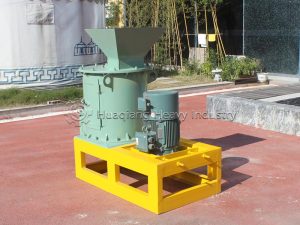
Abnormal material moisture and characteristics are the primary causes of uneven feeding. The moisture content of semi-wet materials should be maintained within the optimal range of 45%–55%. Excessive moisture causes materials to clump together, clogging the hopper and inlet, which leads to intermittent feeding; conversely, low moisture can cause materials to scatter too quickly, resulting in sudden surges in feed volume. Production issues can be mitigated at the source through pre-treatment: blending high-moisture materials with straw powder or dry waste to adjust moisture levels, stockpiling materials beforehand to reduce moisture, breaking up clumps, and screening out large impurities and fibrous debris.
Haphazard manual feeding and a lack of quantitative control are the main human-related issues. Dumping materials in large batches often creates sudden piles that exceed the equipment’s rated throughput, causing congestion within the crushing chamber. The most effective solution is to upgrade the feeding system by installing a variable-frequency quantitative feeder or a screw conveyor. Utilizing a speed-control system to match the crusher’s efficiency enables continuous, steady, and quantitative feeding, thereby eliminating interruptions or surges and maintaining a stable equipment load.
Material buildup on the equipment and component malfunctions can further exacerbate feeding imbalances. Prolonged operation can lead to the accumulation of material residue within the hopper, feed inlet, and crushing chamber walls; furthermore, screen clogging and component deformation can impede smooth material flow. Routine shutdowns are necessary to clear accumulated material and tangled fibrous debris from the chamber, inspect the integrity of the screen and the condition of conveying components, and promptly repair or replace deformed or worn parts to ensure an unobstructed material path.
Standardized operation and routine maintenance are key to long-term reliability. Avoid feeding large quantities of material at once; instead, monitor the half-wet material crusher’s performance and promptly reduce the feed rate if abnormal noises occur, the output particle size coarsens, or the load increases. Implementing a regular inspection schedule and optimizing the balance between feed rate and equipment rotational speed can effectively resolve uneven feeding issues, protect the equipment, ensure consistent crushing quality, and enhance the overall operational efficiency of the production line.