

In organic fertilizer production lines, crushing is a core step in raw material pretreatment, directly influencing the overall effectiveness of subsequent fermentation, granulation, and molding processes. Many manufacturers face production bottlenecks and poor product quality primarily due to issues in the raw material crushing stage. Standard crushers are prone to clogging, material adhesion to walls, and uneven crushing. In contrast, the half-wet material crusher—leveraging specific advantages tailored to the characteristics of organic fertilizer raw materials—has become the equipment of choice and is recognized industry-wide as the core pretreatment machine.
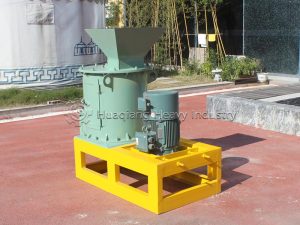
Most raw materials for organic fertilizer—such as livestock manure (cattle, chicken, pig), crop stalks, sludge, and kitchen waste—have high moisture content, typically ranging from 30% to 60%. Traditional crushers are designed for dry materials; when handling moist materials, they easily cause adhesion and clumping. This not only clogs screens and jams the machinery but also necessitates frequent shutdowns for cleaning, severely reducing production efficiency and increasing labor and maintenance costs. Conversely, the half-wet material crusher is specifically designed for high-moisture materials. Featuring a screenless and grate-free structure, it fundamentally eliminates clogging issues associated with wet materials, allows for continuous operation, and is suitable for crushing a wide variety of moist organic feedstocks.
Crushing uniformity is crucial for ensuring organic fertilizer quality. Uneven particle sizes lead to inconsistent temperature rises and decomposition rates during fermentation, resulting in localized over-decomposition and incomplete fermentation of some materials. Ultimately, this yields a finished product with uneven nutrient content and poor physical appearance. The half-wet material crusher employs a high-speed dual-rotor structure where materials collide and undergo fine grinding. The resulting particles are fine and uniform, eliminating the need for secondary screening. This ensures consistent material porosity, significantly boosts fermentation and decomposition efficiency, and guarantees the quality of the finished organic fertilizer.
Furthermore, the equipment is highly practical and versatile, with models available to suit everything from small home-based workshops and medium-sized processing plants to large-scale industrial production lines. It also offers low energy consumption, a low failure rate, simple operation, and easy maintenance, effectively reducing operational costs and increasing overall production capacity. In summary, the half-wet material crusher effectively resolves the core challenges associated with organic fertilizer production—such as the difficulty of crushing wet materials, frequent machine clogging, poor output quality, and low efficiency—while balancing efficiency, quality, and cost; this is precisely why it has become an essential, preferred piece of equipment for organic fertilizer production.